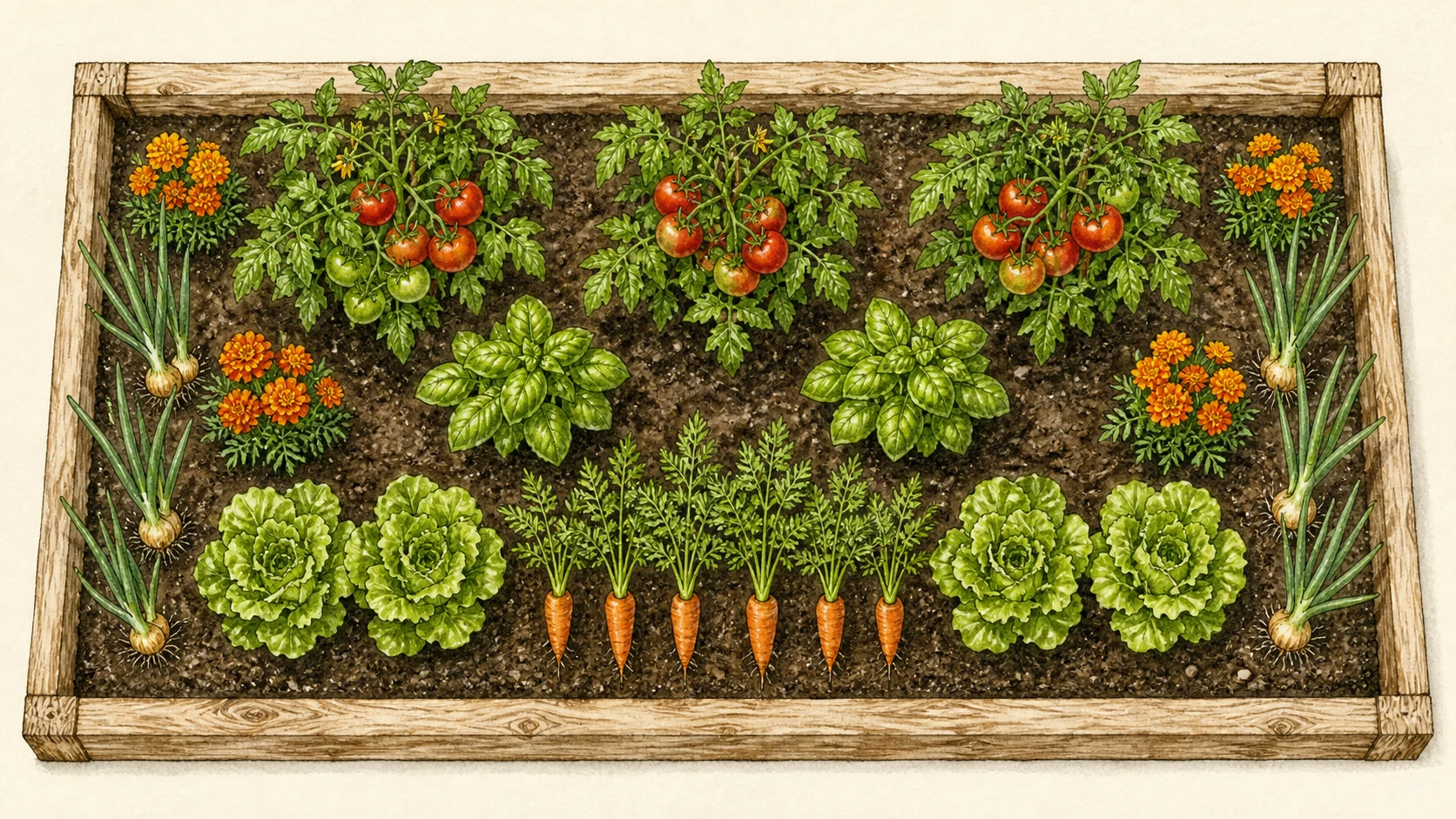

Build a Garden That Fits
Plan smarter beds and grow with confidence.
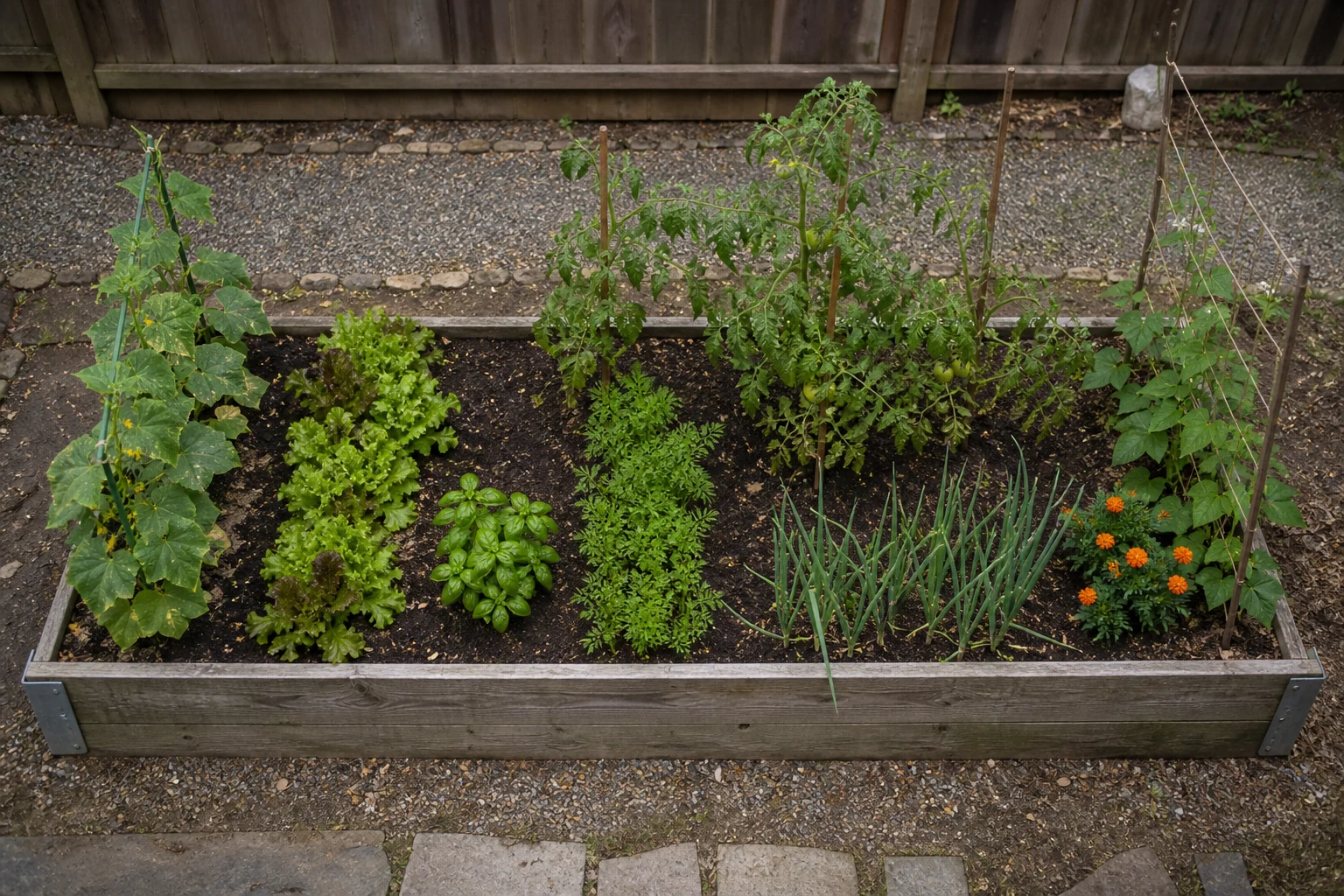 12 ft4 ft
What it considers
- Bed or container dimensions, north direction, paths and fixed objects
- Your frost dates and each crop's windows, so plants overlap in time only when they really would
- Real spacing and footprints (63 catalog plants)
- Sun, canopy shade, roots, water, soil pH, fertility and harvest access
- Bed history and family rotation, as a separate layer
- 119 reviewed companion records, applied only in matching context
- Your priorities: yield, ease, diversity, pollinators, pest support, succession or experimentation
What it cannot know
- Your actual frost this year, your microclimate, your soil's history before you
- Whether the beneficial insects a record relies on live near you
- Cultivar differences beyond what the catalog records
- Anything about plants outside the catalog
Every result says what was applied, what could not be applied and why, and what is unknown. The companion score never overrides spacing, season, light, water or rotation.
Privacy and storage
Plans are saved in your browser (IndexedDB) and never sent to a server. Export to JSON to back up or move between devices; print a plan and task list. Supported calendar regions: Portland, Oregon; Minneapolis–St. Paul, Minnesota; Atlanta, Georgia; London and South-East England; Zagreb and continental Croatia; Melbourne, Victoria. Elsewhere, enter your own frost dates. Setup takes about five minutes.
No account, no tracking, works offline after the first visit.
Sample result
How a plan is made
- Location and season. Region preset or your own frost dates; no device location required.
- Garden type. In-ground, raised bed, container, greenhouse or mixed.
- Beds. Dimensions, north direction, paths, trellis and no-plant zones.
- Sun, soil and water. Simple categories per bed.
- Crops and quantities. Search, pick, fix positions if you want.
- Bed history. What grew there before, for rotation.
- Priorities. What matters most to you.
- Generate. Three alternatives, each with a reason ledger; compare, regenerate, override with a recorded reason, save, print, export.
Every step can be skipped with "unknown"; the result says what that cost. Back navigation keeps your entries; save-and-exit resumes later.