Companion Planting, With Context
Explore which plants may help, compete, or simply coexist—and see the evidence behind every claim.
How Tomato and Basil work together
Summary of evidence · 3 records
Supported
The field trial gives density-dependent (conditional) support, not a blanket "supported" rule.
Records: 0Conditional
In replicated field trials, tomato–basil mixtures used land more efficiently than either crop alone at some…
Records: 1Traditional
Gardeners widely report that basil improves tomato flavour or growth. The reviewed field study measured…
Records: 2No verified relationship
No verified disease-prevention or flavour effect found.
Records: 0
No red flags found.
No credible negative interaction in typical home-garden conditions; both want sun, warmth and steady water.
How to plant them together
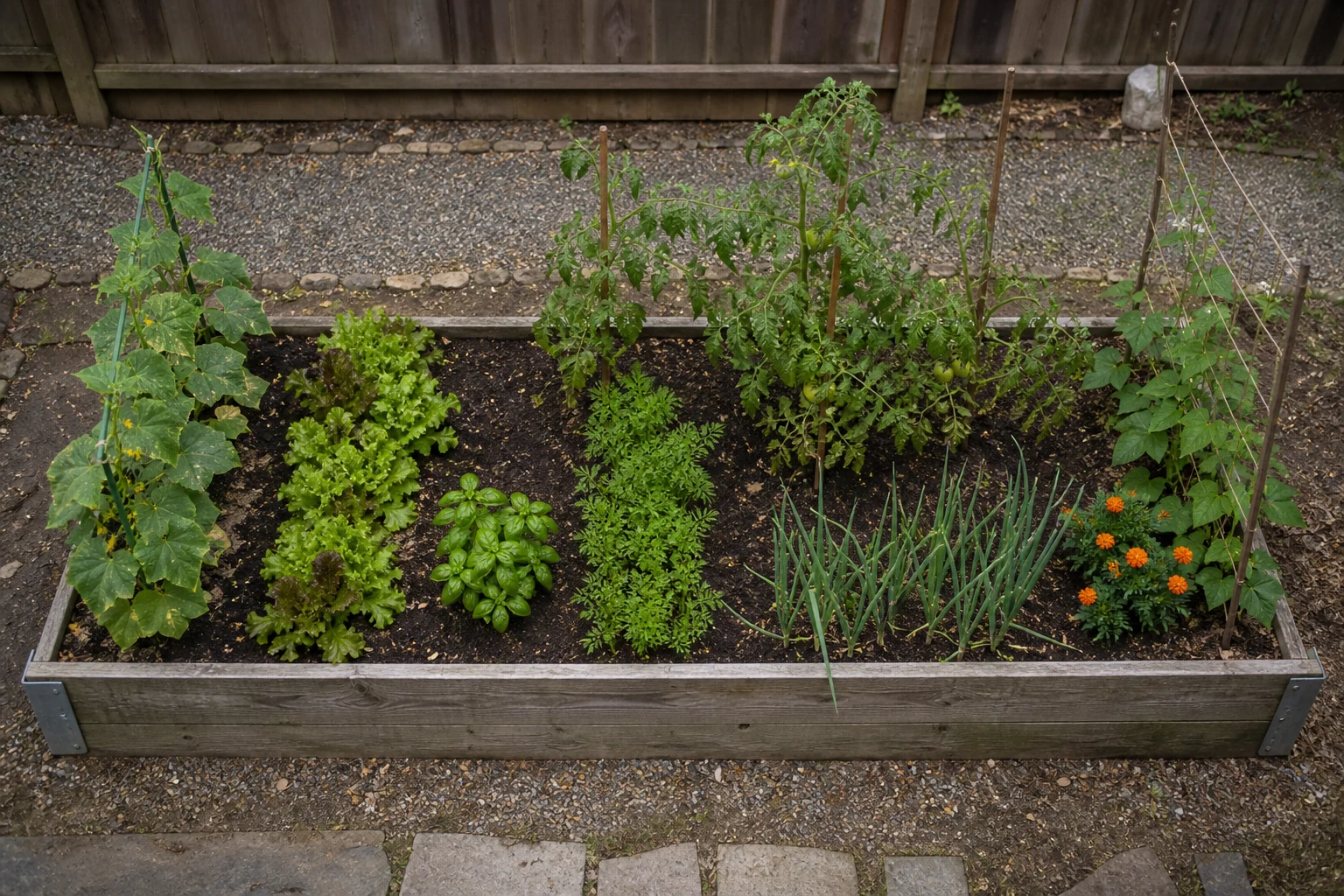
Example layout (worked example, not a trial photo)
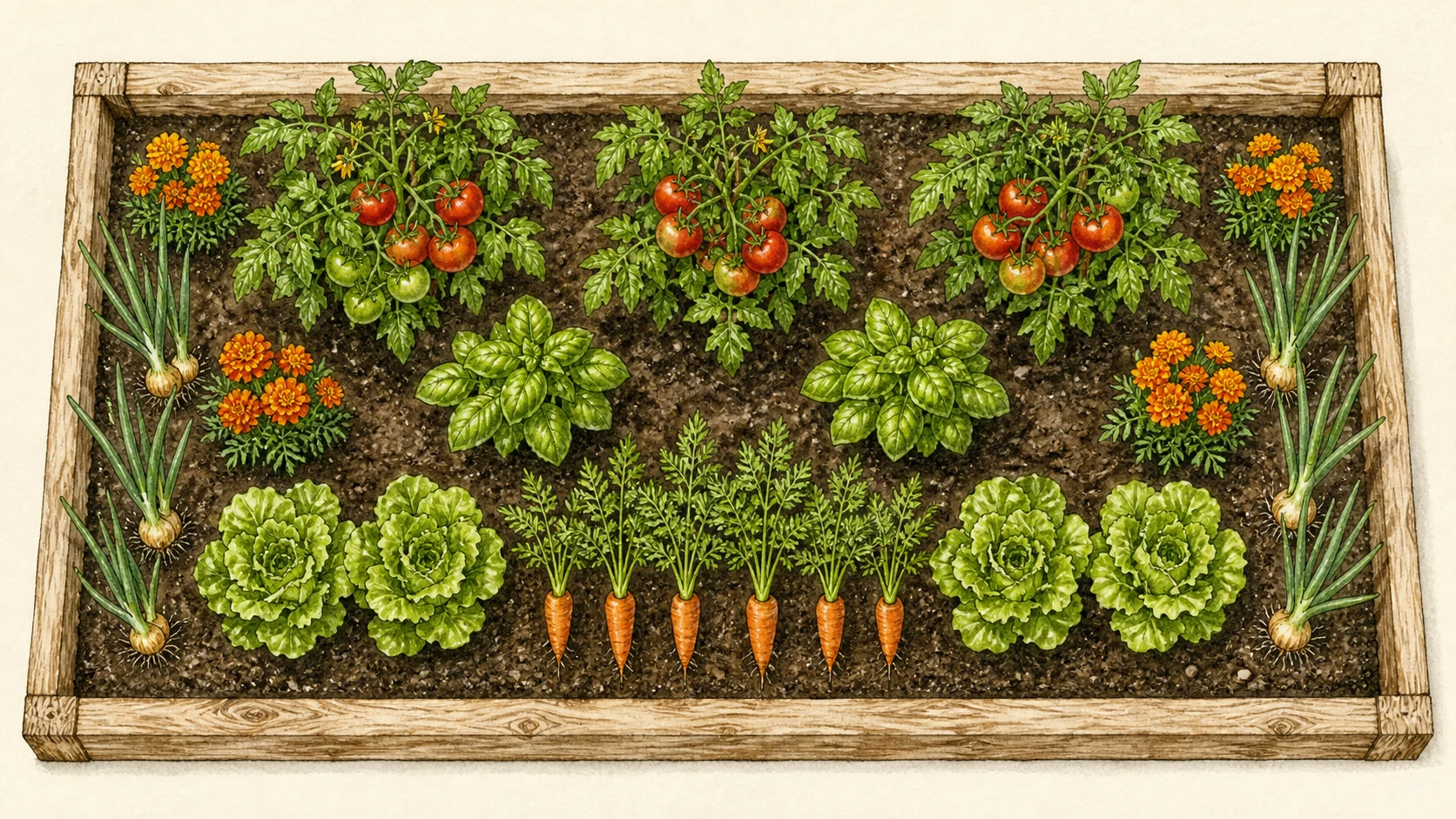
Notes: keep basil 30–45 cm from tomato stems so the tomato canopy does not shade it; avoid crowding to keep airflow and reduce disease risk.
Seasonal overlap
Active growth in Portland, Oregon (estimate)
Tomato
Basil
Both present Apr 19 – Nov 5. Outside that window no relationship can apply.
Why they work together (key mechanisms)
Multiple mechanisms may contribute.
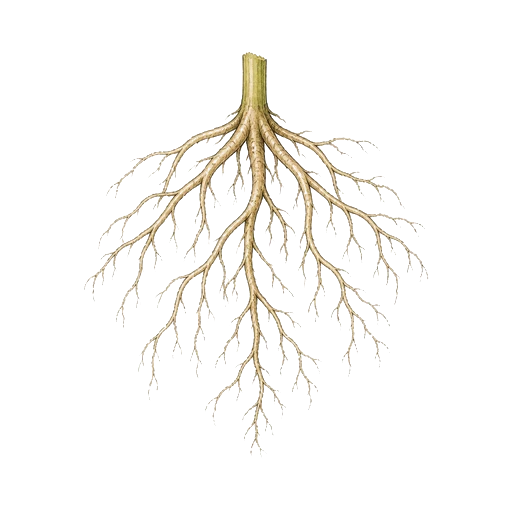
Pest suppressionVolatiles or ground cover that disrupt a named pest's host-finding.Beneficial insectsSmall open flowers feeding hoverflies, lacewings and parasitic wasps.Space & shadeDifferent heights, roots and canopies sharing a bed efficiently.Physical supportOne plant holding another up, as corn does for climbing beans.CompetitionLight, root, water and nutrient conflicts that outrank any companion claim.
Full tomato companion profile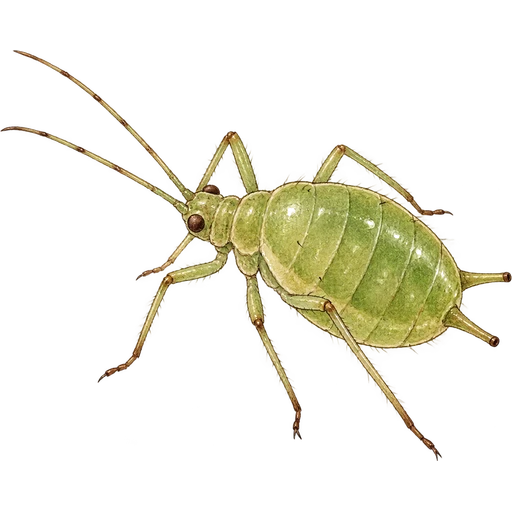 Pest suppression
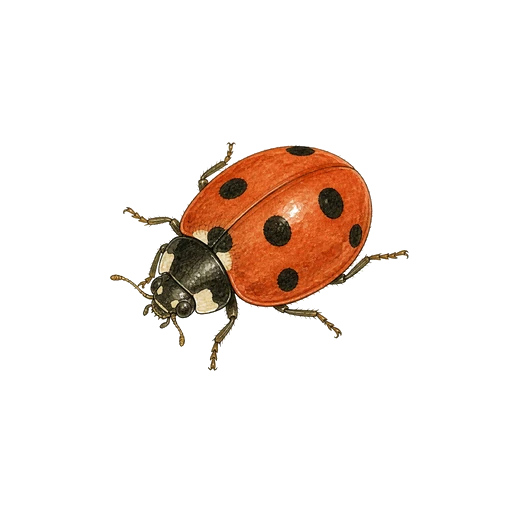 Beneficial insects
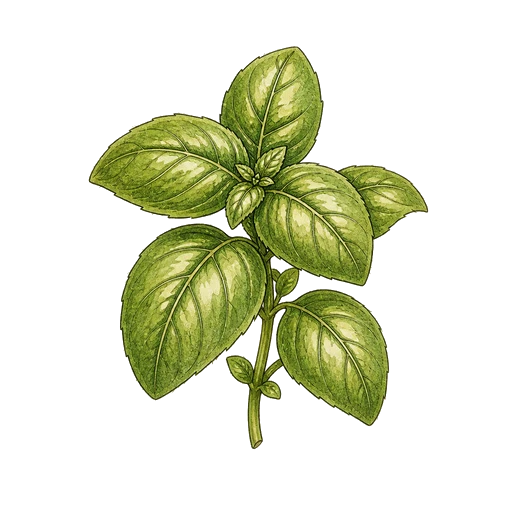 Space & shade
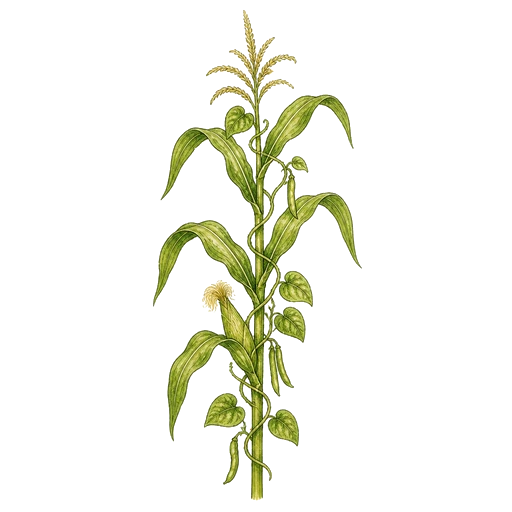 Physical support
 Competition
Companions A–Z
View all companionsBrowse popular focal plants; every supported plant has a profile, including those with zero reviewed pairs.
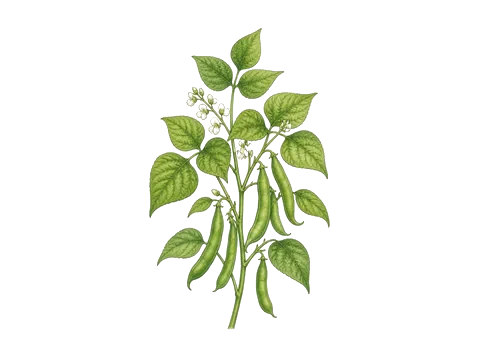
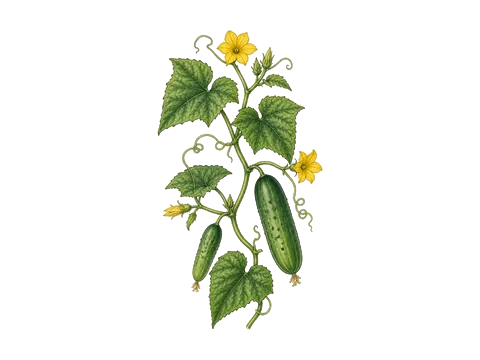
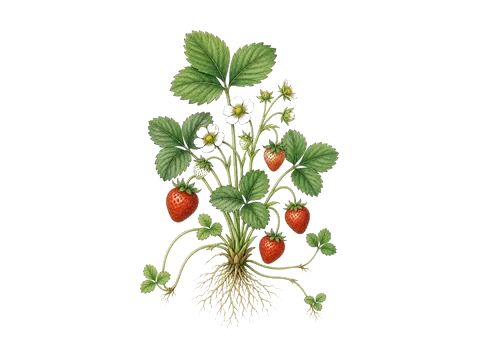
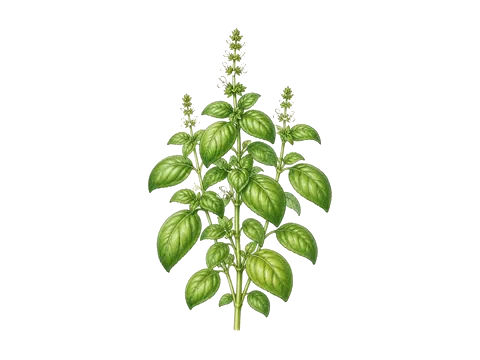

What companion planting means, and what research supports
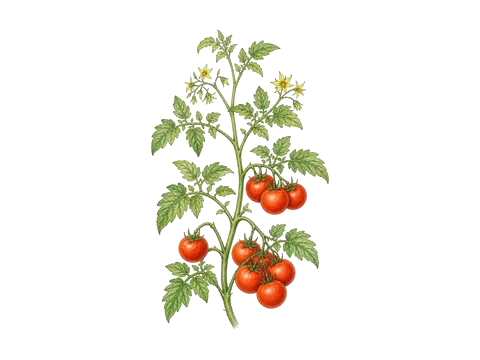
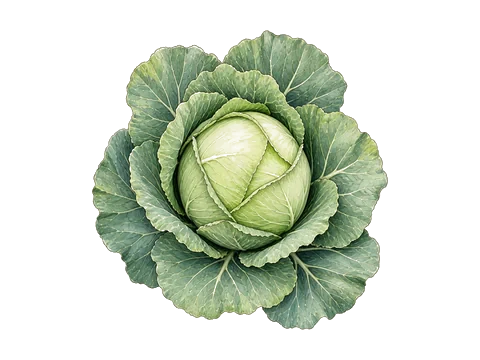
Companion planting is growing two or more plants close together on purpose because one is expected to affect the other. Popular charts present this as a universal list of friends and enemies. The research does not support that picture. What it supports is a set of specific, named mechanisms, each with conditions: ground cover that disrupts a pest's host-finding (cabbage undersown with clover), flowers that feed the insects that eat aphids (sweet alyssum in broccoli and lettuce), a more attractive plant that intercepts a pest at the edge of a field (Blue Hubbard squash for cucumber beetles), and physical or spatial complementarity (beans climbing corn, basil under the tomato canopy).
Syntheses of hundreds of intercropping experiments find that diversified plantings usually reduce pest numbers and increase natural enemies, but effect sizes vary widely by crop combination and arrangement, and yields per crop are often lower than in monocultures. A 2023 meta-analysis of cabbage intercropping found substantially less pest injury alongside a modest productivity cost. Those are trade-offs to plan around, not plant friendships.
Six statuses, with examples
Supported benefit
white-clover → cabbage — Clover undersown in cabbage reduced several pests in replicated trials and a meta-analysis.
Positive score when the plan matches the documented conditions.
Conditional benefit
sweet alyssum → broccoli — Alyssum strips feed aphid-eating hoverflies, if a small share of the bed flowers near the crop.
Positive only when the stated conditions match; otherwise informational.
Traditional claim
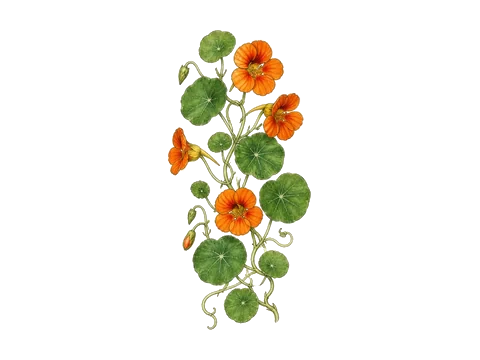
nasturtium → cabbage — Widely repeated as a trap crop; no controlled trial found.
Never a hard rule; may appear as an optional experiment.
Avoid or separate
potato ↔ tomato — Both host late blight; adjacent plantings spread it.
Hard constraint only for serious, applicable conflicts; otherwise a weighted warning.
Conflicting evidence
Brussels sprouts ↔ tomato — Charts say avoid; the one field trial found only ordinary competition.
Both findings are shown; the planner neither rewards nor blocks automatically.
No verified relationship
tomato ↔ cucumber — No usable evidence either way; fit is judged on light, water and space.
Zero score and an honest unknown state. Spacing, light, water and timing are evaluated normally.
Why rotation, spacing, timing and resources are separate
Crop rotation concerns what grew in a bed in previous seasons and the soil-borne diseases and pests that carry over; it is calculated between seasons, not between neighbours. Spacing, light, water, soil pH and harvest access are physical facts about two plants that apply whether or not a companion claim exists. Timing decides whether two plants are present together at all. The planner checks all of these before any companion evidence is allowed to move a plant.
Mechanism guides
Pest suppressionVolatiles or ground cover that disrupt a named pest's host-finding.Beneficial insectsSmall open flowers feeding hoverflies, lacewings and parasitic wasps.Space & shadeDifferent heights, roots and canopies sharing a bed efficiently.Physical supportOne plant holding another up, as corn does for climbing beans.CompetitionLight, root, water and nutrient conflicts that outrank any companion claim.Trap cropsA more attractive plant that draws a pest away and then gets managed.
 Trap crops
Reviewed pair articles
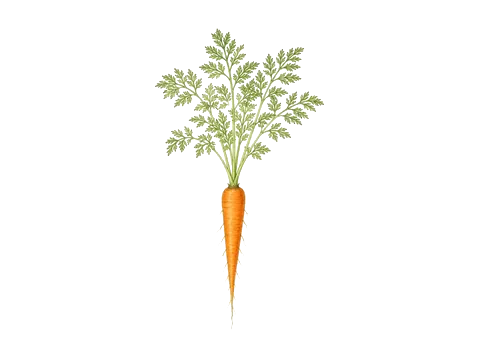
Only pairs with enough evidence for a standalone analysisSupportedCabbage and White cloverCan cabbage and clover grow together?ConditionalTomato and BasilCan basil and tomatoes grow together?SupportedCorn and Pole beansCan beans climb corn, and do they feed it?ConditionalBroccoli and Sweet alyssumDoes alyssum protect broccoli from aphids?ConditionalCucumber and Winter squashCan a squash trap crop protect cucumbers from cucumber beetles?ConditionalOnion and CarrotDo onions keep carrot fly off carrots?
Other pair checks run in the finder and are not indexed; that protects readers from fabricated certainty and the site from thin pages.
Popular comparisons
See evidence summaries for other common pairings.
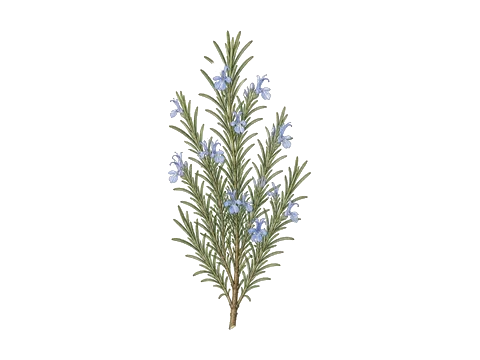
Tomato & French marigold Tomato & Cucumber Tomato & Carrot Basil & Rosemary Cabbage & White clover Corn & Pole beans
Explore more comparisonsOur methodology
Transparent, evidence-aware, and continually updated.
Direction
Every record says which plant affects which; A→B never implies B→A.
Context matters
Outcomes depend on climate, cultivar, arrangement, distance and timing; the planner applies a record only when the plan matches.
Limitations
Results reflect the available research; many interactions are understudied in home gardens and stay "unknown".
Sources
Peer-reviewed studies, university extension publications and trusted horticulture resources, each linked to the claim it supports.
This tool is for educational use. Always consider local conditions and test in a small area first.