Cabbage and white clover: the best-studied companion pairing
Reviewed August 15, 2026 · Garden Planner editorial team (pending independent horticultural review)
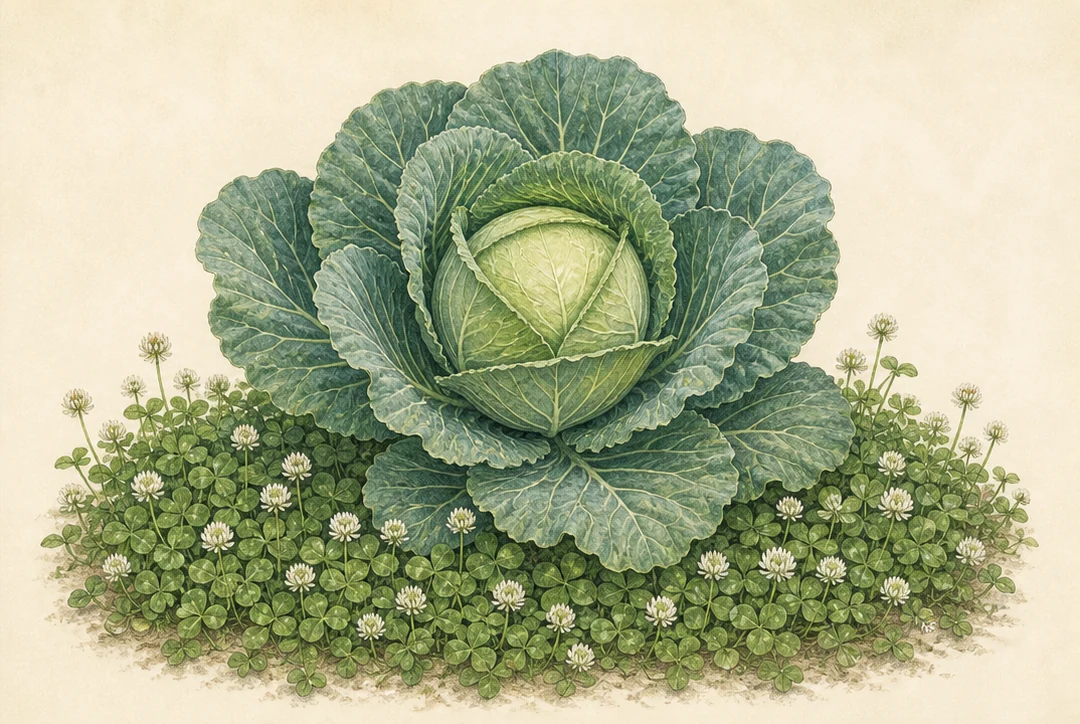
Short answer. Yes, and this is one of the few pairings with replicated field evidence: white clover undersown beneath cabbage reduced egg-laying and infestation by cabbage root fly and other pests in UK and Dutch trials, and a 2023 meta-analysis found substantially lower pest injury across cabbage intercropping studies. The cost is competition: unmanaged clover reduced head size, so the clover must be sown after the cabbage is established and mown when it reaches about 15 cm.
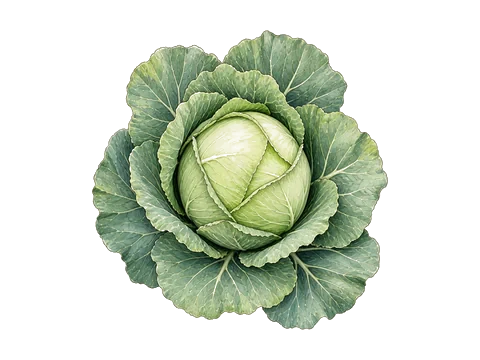
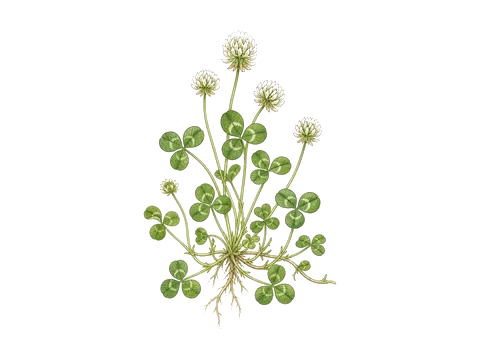
Direction of effect
White clover affects cabbage (clover → cabbage). No effect of cabbage on clover is claimed.
Mechanism and outcome
Cabbage root fly and several other brassica pests find their host by repeated landings on green surfaces. On bare soil nearly every landing is on cabbage; on a clover background many landings are 'inappropriate', the insect's host-finding sequence is interrupted and it leaves. Outcomes measured: egg counts, larval infestation and pest injury; head weight and marketable yield for the cost side.
What was studied
Field plots of white cabbage undersown with clovers in the Netherlands (Theunissen et al. 1995) and UK experiments on host selection with non-host backgrounds (Finch & Collier 2000). A 2023 meta-analysis pooled cabbage intercropping trials across many companions and arrangements (Carrillo-Reche et al. 2023). Production context: field-scale vegetable plots, not home beds.
Evidence records
| Record | Status | Effect | Tier | Arrangement | Sources |
|---|---|---|---|---|---|
white-clover--cabbage--living_mulch | Supported | Living mulch | Tier A | undersown | finch-collier-2000, theunissen-1995, carrillo-reche-2023 |
white-clover--cabbage--root_competition | Avoid | Competes for root space | Tier B | undersown | theunissen-1995, carrillo-reche-2023 |
Practical home-garden interpretation
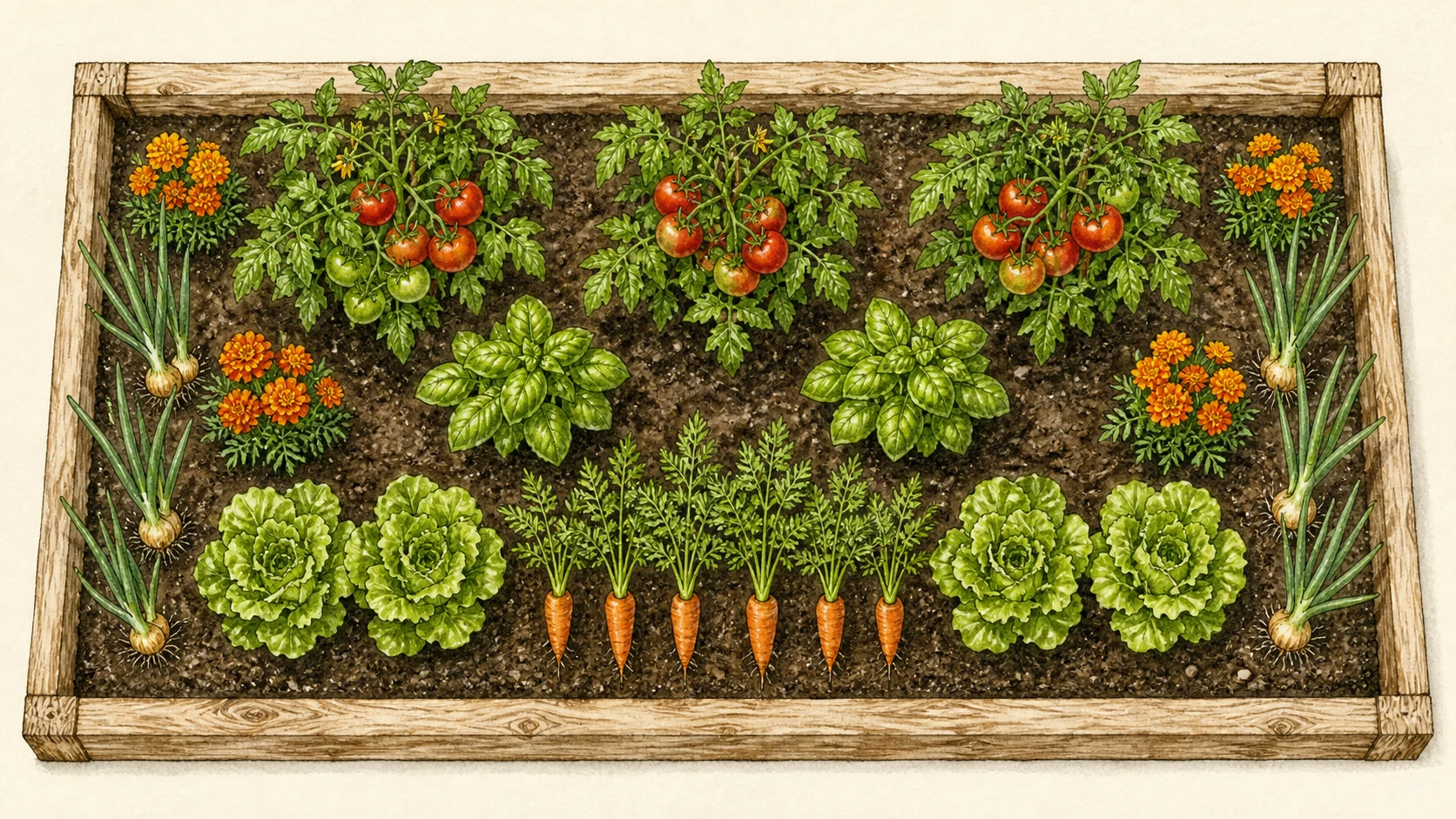
In a home bed, the effect depends on reproducing the one thing the trials had in common: continuous ground cover around the cabbages while they are vulnerable, from transplanting to heading. A few clover plants at one end of the bed will not do it. The trade-off is real: expect somewhat smaller heads unless the clover is kept short and the bed is watered in dry spells.
Exact conditions required
- Transplant cabbage at normal spacing (45–60 cm).
- Broadcast white clover between plants two to four weeks later, or mow established clover short before transplanting.
- Mow or shear clover to 5 cm whenever it reaches 15 cm.
- Water the bed in dry spells; clover competes for water.
- Terminate the clover at the end of the season (mow, cover or dig in); it is perennial.
Benefits, costs and uncertainty
Benefits
- Lower egg-laying by cabbage root fly and lower infestation by several pests in trials.
- Weed suppression and soil cover.
- Nitrogen from clover residues to the following crop.
Costs
- Modest average reduction in cabbage productivity (head size) in the meta-analysis; larger when clover is unmanaged.
- More labour: mowing, watering.
- Clover harbours slugs in wet climates.
- Clover persists if not terminated.
Uncertainty. Trials were farm-scale; the magnitude of the effect in a 1.2 m bed is not measured. The benefit is lower pest injury, not higher yield. Results vary with pest pressure, clover density and management.
Simultaneous pairing versus rotation
This is simultaneous intercropping. Rotation still applies to the cabbage: do not return brassicas to the bed for three years because of clubroot and root fly pupae in the soil. Clover is a legume and does not interfere with that rotation.
Alternative strategies
- Fine insect mesh over the cabbages from transplanting (most reliable, no yield cost).
- Brassica collars at the stem base against root fly.
- Collard trap rows around cabbage for diamondback moth (Mitchell et al. 2000).
- Sweet alyssum strips for aphid-eating hoverflies.
Use this arrangement in the planner
Adds both plants to a plan; set the role (perimeter, strip, undersown) on the crop list so the engine can match the documented arrangement.
Add cabbage and white clover to a planCommunity observations (anecdotal)
Reports from gardeners are kept apart from the reviewed evidence above and never change its status. None yet for this pair. Record an observation.
Sources
- Finch, S., Collier, R. H. (2000). Host-plant selection by insects – a theory based on 'appropriate/inappropriate landings' by pest insects of cruciferous plants. Entomologia Experimentalis et Applicata. Non-host plants surrounding brassicas disrupted pest host-finding (inappropriate landings), reducing egg-laying by cabbage root fly and others. The effect depends on ground cover, not the identity of a 'repellent' companion.
- Theunissen, J., Booij, C. J. H., Lotz, L. A. P. (1995). Effects of intercropping white cabbage with clovers on pest infestation and yield. Entomologia Experimentalis et Applicata. Undersowing cabbage with clover reduced several pests, but the clover competed with cabbage and reduced head size unless managed (for example by mowing or delayed sowing).
- Carrillo-Reche, J., et al. (2023). Cabbage intercropping synthesis. Agriculture, Ecosystems & Environment. Intercropping cabbage with companion plants substantially reduced pest injury on average, alongside a modest average reduction in cabbage productivity. These are trade-offs, not a free benefit.
- Thilakarathna, M. S., McElroy, M. S., Chapagain, T., Papadopoulos, Y. A., Raizada, M. N. (2016). Belowground nitrogen transfer from legumes to non-legumes under managed herbaceous cropping systems. A review. Agronomy for Sustainable Development. Living legumes transfer only a small and variable share of fixed nitrogen to neighbours during the season; most benefit comes after residues decompose. A legume next to a heavy feeder is not a fertiliser substitute.
Change history: repository commits touching src/data/pairs.json and the records above. Request a correction.