Tomato and basil: what the one field trial actually found
Reviewed August 15, 2026 · Garden Planner editorial team (pending independent horticultural review)
Short answer. Yes. They share a season, a sun requirement and a watering rhythm, and a replicated field trial found that tomato–basil mixtures used land more efficiently than either crop alone at moderate density. The trial found no special interaction: the benefit was ordinary spatial complementarity, and at high density basil was shaded out. Flavour improvement and pest repellence are traditional claims with no controlled evidence.
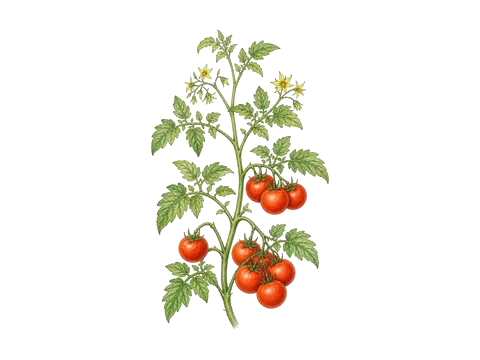
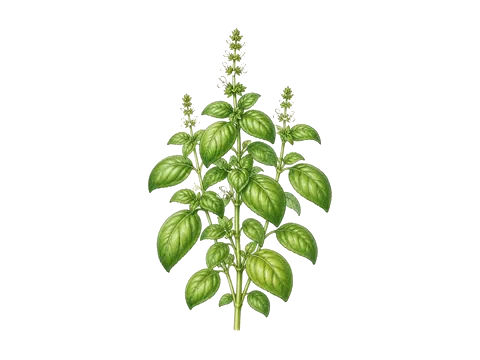
Direction of effect
Mutual for space use (both benefit from complementary canopies). Claimed flavour and pest effects would run basil → tomato; neither is supported.
Mechanism and outcome
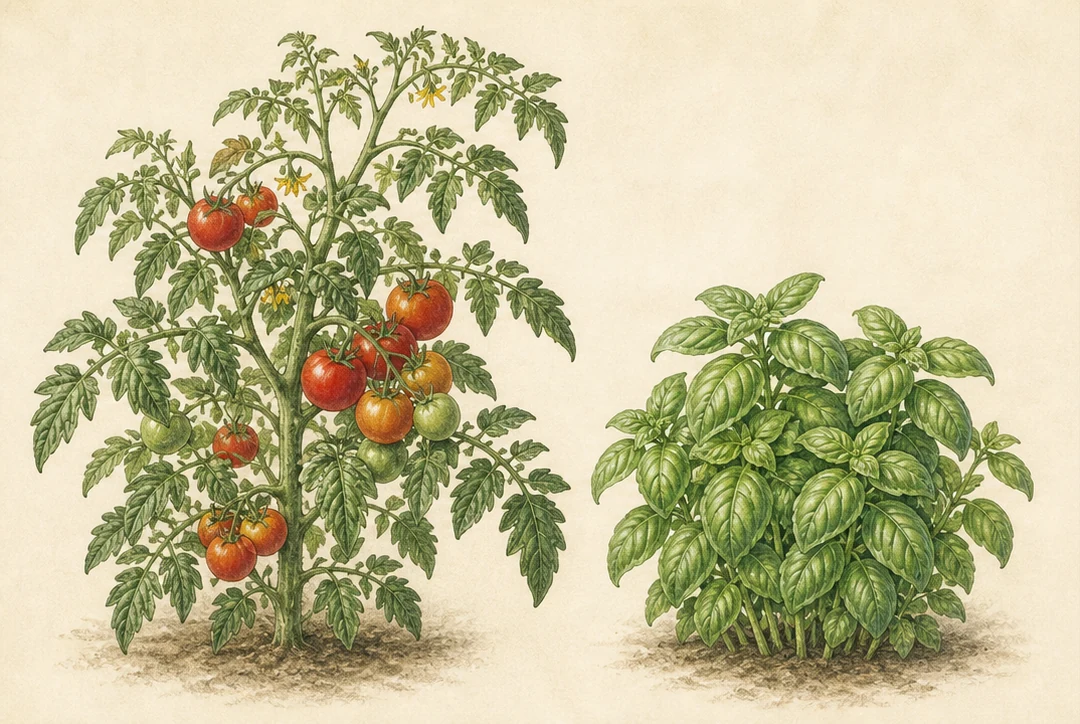
Basil occupies the lower canopy and a shallower root zone beside taller, deeper-rooted tomatoes, so at moderate density the two use light and soil that a single crop would leave unused. Outcome measured: land-equivalent ratio and yields of each crop.
What was studied
Biointensive beds in West Virginia, USA; tomato and basil grown alone and in mixtures at several densities, with Brussels sprouts as the 'discouraged' comparison (Bomford 2009). Field production context.
Evidence records
| Record | Status | Effect | Tier | Arrangement | Sources |
|---|---|---|---|---|---|
basil--tomato--spatial_complement | Conditional | Space and shade complement | Tier B | mixed | bomford-2009 |
basil--tomato--flavor_or_growth | Traditional | Flavour or growth claim | Tier D | unspecified | bomford-2009, umn-companion |
basil--tomato--pest_suppression | Traditional | Pest suppression | Tier D | unspecified | umn-companion |
Practical home-garden interpretation
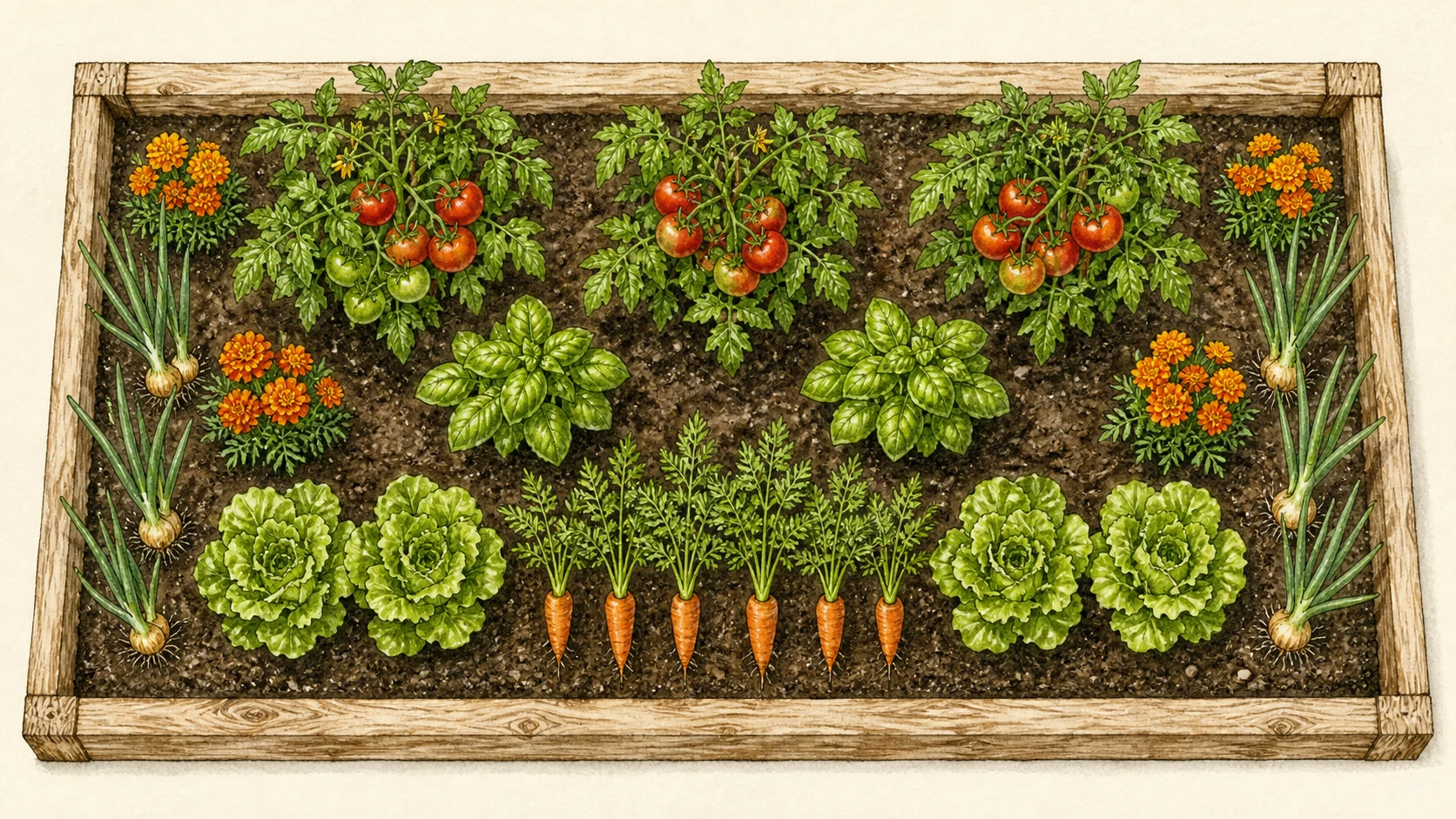
Plant basil 30–45 cm from tomato stems on the sunny side, prune the lowest tomato leaves so basil keeps its light, and do not add basil on top of full tomato density. Expect convenient shared care and a modest gain in total harvest from the space, not better-tasting tomatoes or fewer hornworms.
Exact conditions required
- Transplant both after the last frost when nights exceed 10 °C.
- Basil 30–45 cm from tomato stems, on the sunny side.
- Total planting density no higher than each crop would have alone.
- Remove lower tomato leaves as plants grow so basil is not shaded.
Benefits, costs and uncertainty
Benefits
- Land-equivalent ratio above 1 at moderate density in the trial.
- Matching season, sun and water needs simplify care.
- Basil flowers (if allowed) feed bees and hoverflies.
Costs
- Basil shaded out at high density.
- Both are thirsty; the pair needs consistent water.
- Basil downy mildew in humid regions is unaffected by tomatoes.
Uncertainty. One site, one study. The trial measured yield and land use, not flavour or pests; the popular flavour claim remains untested and the repellent claim has no trial.
Simultaneous pairing versus rotation
Tomato belongs to the nightshade rotation group (3-year gap); basil (mint family) does not affect that rotation. This pairing is about the current season.
Alternative strategies
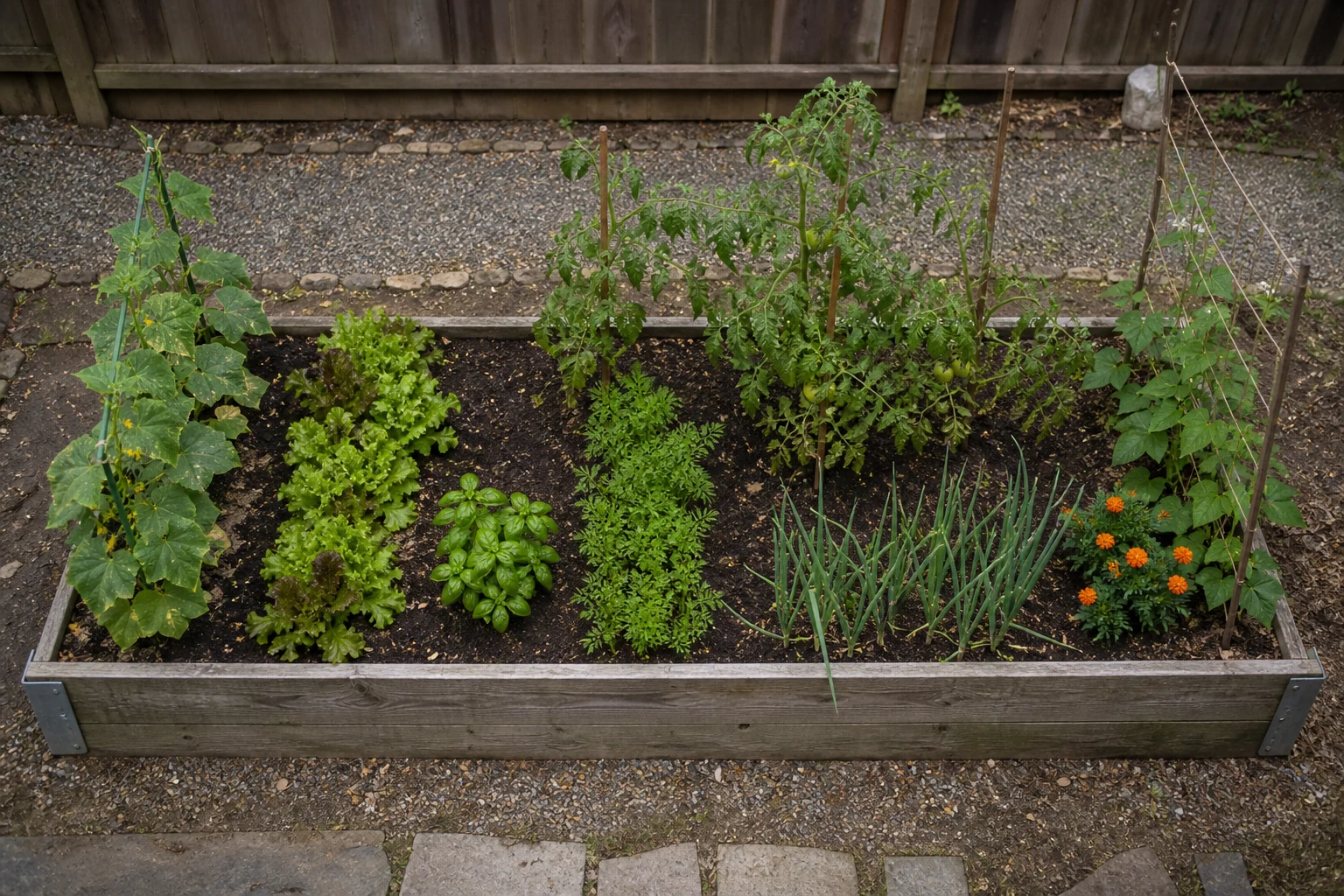
- Lettuce under tomatoes for summer shade (conditional, Tier C).
- French marigolds for glasshouse whitefly (Tier C, protected cropping).
- Sweet alyssum nearby for aphid predators (indirect evidence).
Use this arrangement in the planner
Adds both plants to a plan; set the role (perimeter, strip, undersown) on the crop list so the engine can match the documented arrangement.
Add tomato and basil to a planCommunity observations (anecdotal)
Reports from gardeners are kept apart from the reviewed evidence above and never change its status. None yet for this pair. Record an observation.
Sources
- Bomford, M. K. (2009). Do tomatoes love basil but hate Brussels sprouts? Competition and land-use efficiency of popularly recommended and discouraged crop mixtures in biointensive agriculture systems. Journal of Sustainable Agriculture. Tomato–basil mixtures achieved land-use efficiency above sole crops at some densities, while the popularly discouraged tomato–Brussels sprout mixture did not behave as a harmful pairing. Neither result depended on a special 'friendship'; density and competition explained the outcomes.
- University of Minnesota Extension (2023). Companion planting in home gardens. University of Minnesota Extension. Separates companion practices with research support (for example trap crops, insectary plants and physical support) from traditional pairings whose origins are hard to identify, and cautions that many popular charts are not evidence-based.
Change history: repository commits touching src/data/pairs.json and the records above. Request a correction.