Broccoli and sweet alyssum: insectary strips for aphid control
Reviewed August 15, 2026 · Garden Planner editorial team (pending independent horticultural review)
Short answer. It can help, under conditions: sweet alyssum strips in organic broccoli supported hoverflies whose larvae eat aphids, and the field agronomy showed that a small share of the bed in alyssum, within a few metres of the crop and flowering while aphids arrive, was enough. More alyssum added competition, not protection, and the hoverflies must be present in your area. Alyssum is itself a brassica and can host flea beetles.
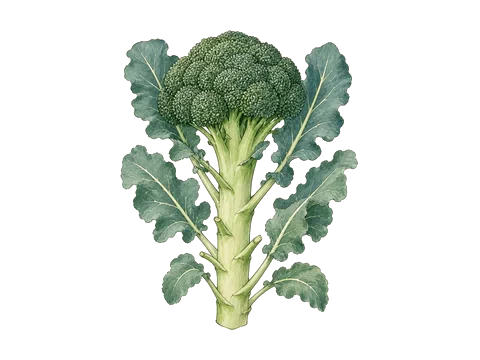
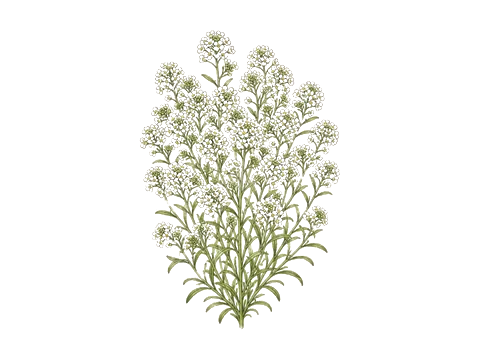
Direction of effect
Sweet alyssum → broccoli (insectary support). No effect of broccoli on alyssum claimed.
Mechanism and outcome
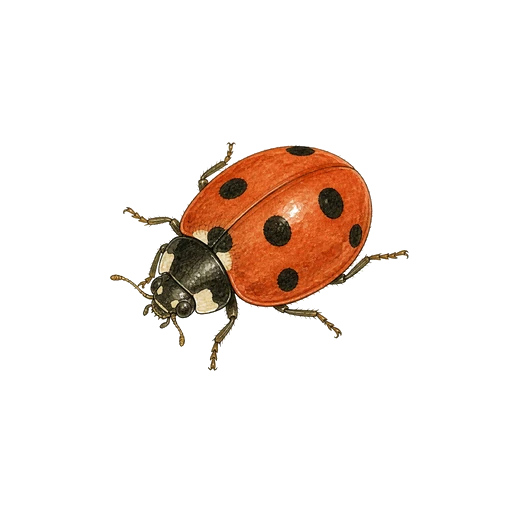
Adult hoverflies (syrphids) need nectar and pollen; alyssum's small open flowers supply them. Adults then lay eggs near aphid colonies and the larvae consume aphids. Outcomes measured: hoverfly egg density and aphid density on broccoli.
What was studied
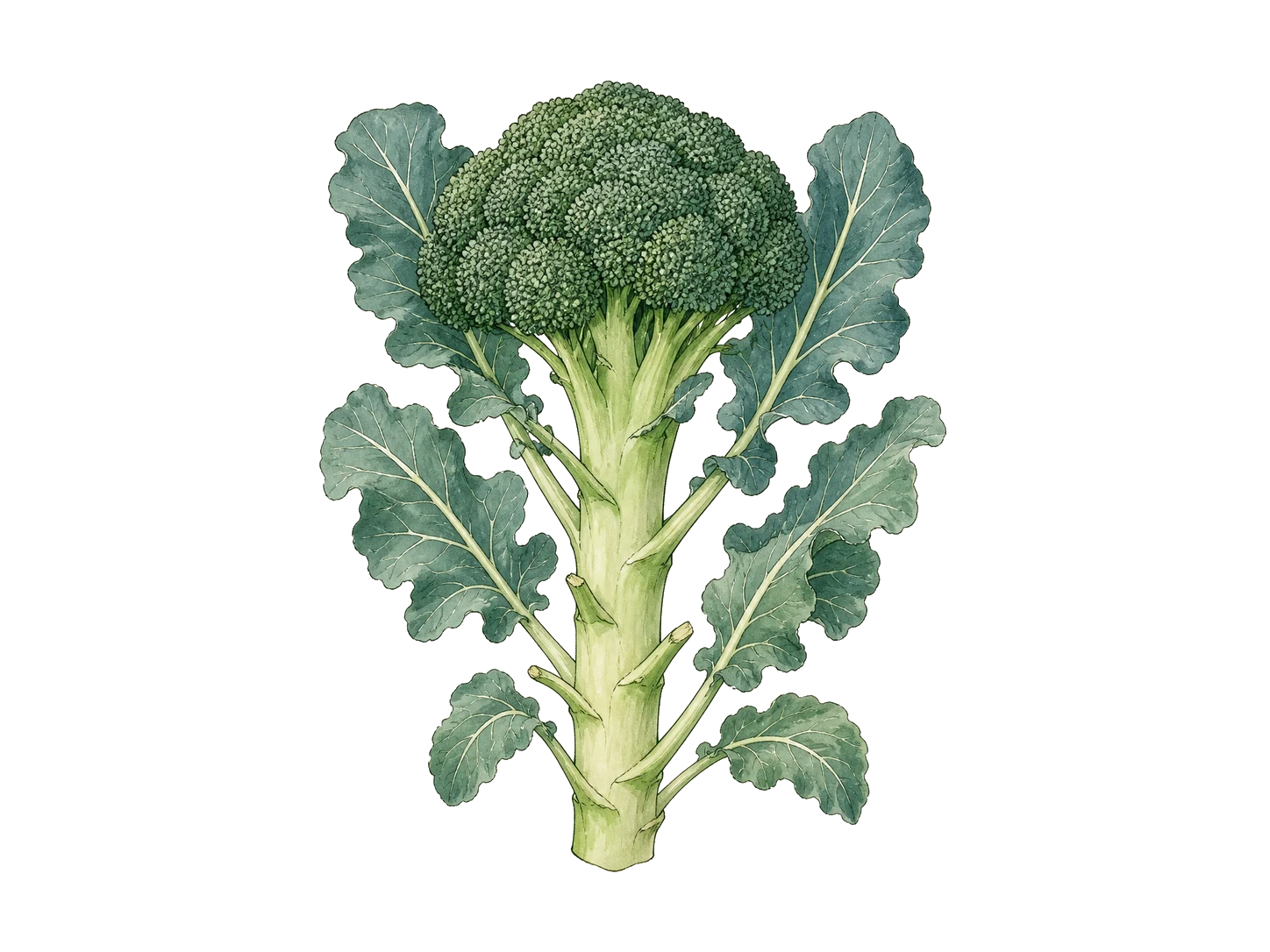
Organic broccoli fields in the Salinas Valley, California, with alyssum in strips or interplanted at about 1–10% of the area (Brennan 2016); flower attractiveness observations (Hogg et al. 2011). Field production context.
Evidence records
| Record | Status | Effect | Tier | Arrangement | Sources |
|---|---|---|---|---|---|
sweet-alyssum--broccoli--insectary_support | Conditional | Supports beneficial insects | Tier B | strip | brennan-2016, hogg-2011 |
Practical home-garden interpretation
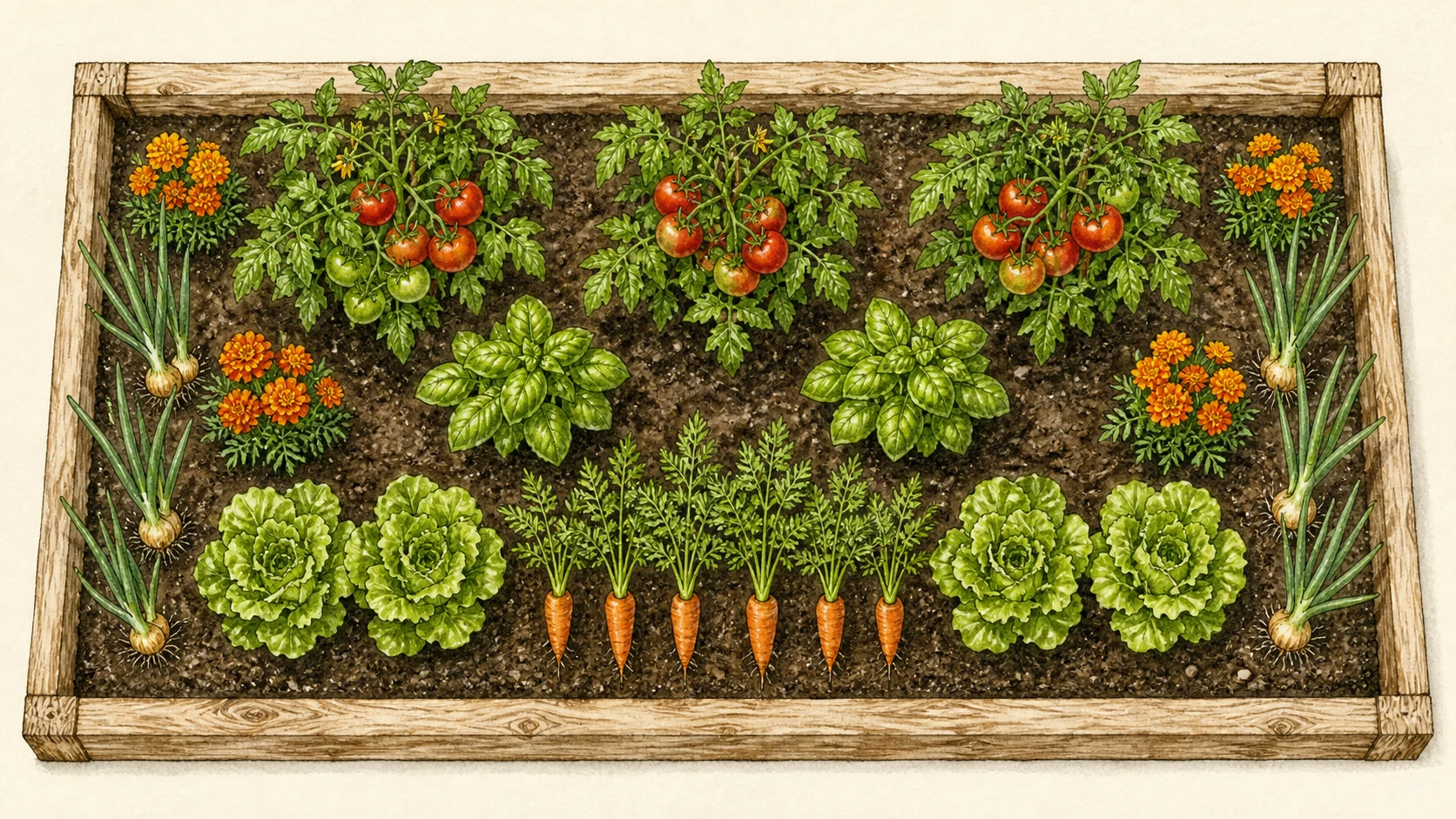
In a home bed, replace roughly one in twenty to one in forty positions with alyssum, or run a 30 cm strip along one edge, and transplant it with the broccoli so it flowers before aphids build up. Shear it once in midsummer to rebloom. Keep watching the plants; the strip invites predators, it does not guarantee them.
Exact conditions required
- Alyssum transplanted with the broccoli so it flowers early.
- About 5% or less of the bed in alyssum, within a few metres of the crop.
- Flowering maintained through the aphid season (shear to rebloom).
- Hoverflies present locally.
Benefits, costs and uncertainty
Benefits
- Hoverfly activity and aphid control in the trials.
- Low cost and space.
- Bees and parasitic wasps also use the flowers.
Costs
- Alyssum occupies crop space; competition rises with its share.
- Alyssum hosts flea beetles and counts as a brassica for clubroot.
- No effect on caterpillars or root fly.
Uncertainty. Farm-scale trials; home-bed magnitude unmeasured. Depends on local beneficial populations.
Simultaneous pairing versus rotation
Both are brassicas: the bed must rest from brassicas for three years afterwards because of clubroot, and alyssum seedlings that persist count.
Alternative strategies
- Coriander, dill or buckwheat strips (similar insectary evidence, less crop-specific).
- Fine mesh to exclude aphids and caterpillars together.
- Squashing colonies and a water jet.
Use this arrangement in the planner
Adds both plants to a plan; set the role (perimeter, strip, undersown) on the crop list so the engine can match the documented arrangement.
Add broccoli and sweet alyssum to a planCommunity observations (anecdotal)
Reports from gardeners are kept apart from the reviewed evidence above and never change its status. None yet for this pair. Record an observation.
Sources
- Brennan, E. B. (2016). Agronomy of strip intercropping broccoli with alyssum for biological control of aphids. Biological Control. Sweet alyssum strips supported hoverflies (syrphids) whose larvae eat aphids; the trade-off is land and competition, which can be minimised by planting alyssum in a small share of the bed.
- Hogg, B. N., Bugg, R. L., Daane, K. M. (2011). Attractiveness of common insectary and harvestable floral resources to beneficial insects. Biological Control. Sweet alyssum, coriander, buckwheat and some other small-flowered plants attracted hoverflies, parasitic wasps and other beneficials; attractiveness differed by plant and insect group, so 'flowers help beneficials' must be specific.
- Brennan, E. B. (2013). Agronomic aspects of strip intercropping lettuce with alyssum for biological control of aphids. Biological Control. Replacing a small share of lettuce plants with alyssum supported hoverflies for aphid control; low alyssum ratios limited the loss of lettuce yield.
Change history: repository commits touching src/data/pairs.json and the records above. Request a correction.