Why?
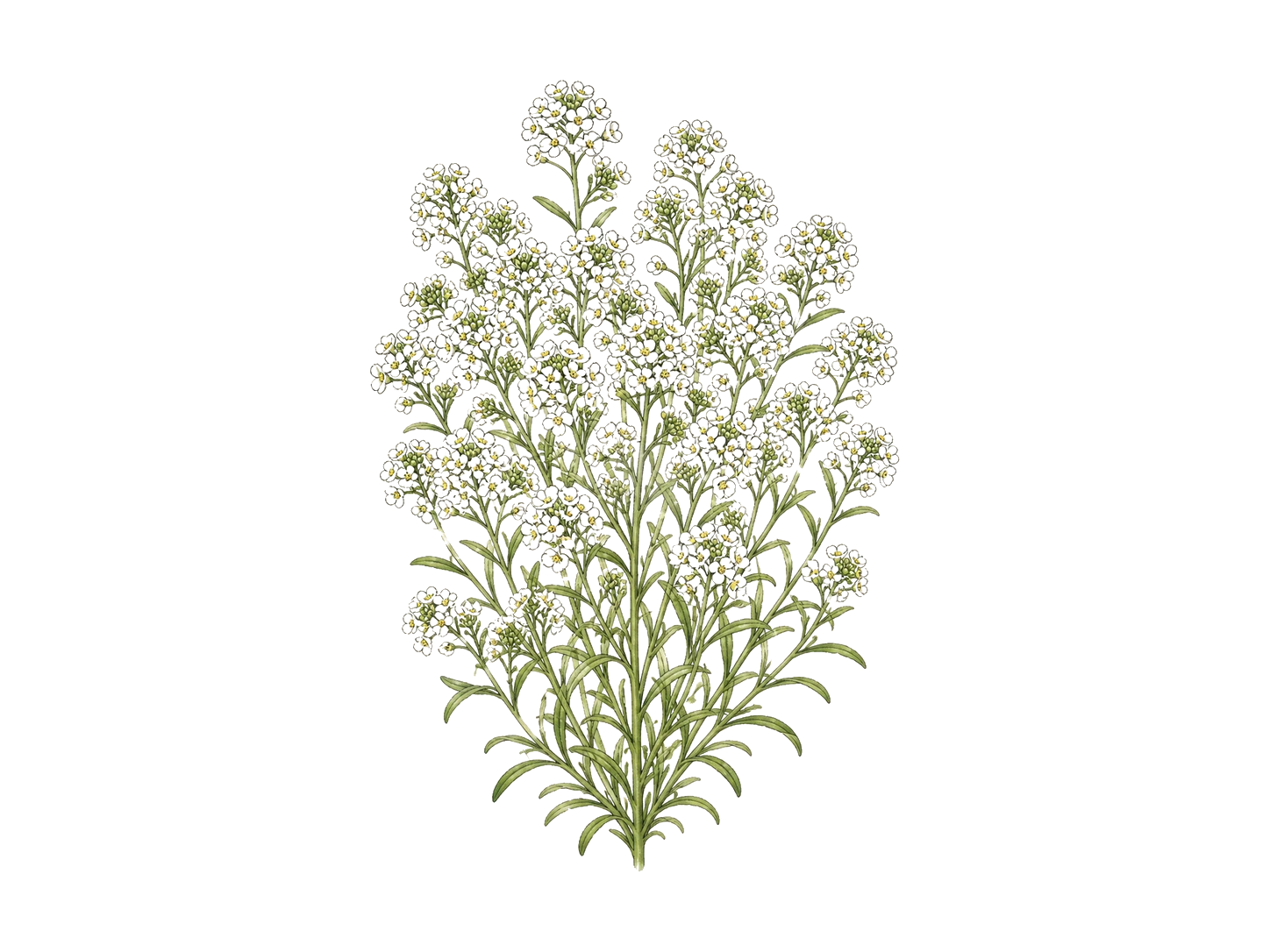
Claim. Sweet alyssum strips in organic broccoli supported hoverflies whose larvae eat aphids; field agronomy showed the benefit depends on the share of the bed given to alyssum and its distance from the crop.
Mechanism. Alyssum flowers supply nectar and pollen to adult hoverflies (syrphids), which lay eggs near aphid colonies; larvae consume aphids.
Studied in. Organic broccoli fields, Salinas Valley, California; alyssum in strips or interplanted at 1–10% of the bed. (field)
Conditions. Transplant alyssum at the same time as broccoli so it flowers before aphids build up. Alyssum within a few metres of the broccoli; a few plants per bed are enough. Alyssum must be flowering while aphids are colonising the broccoli.
Management. Keep alyssum to a small share of the bed (about 5% or less); Shear alyssum to rebloom.
Applies when. Hoverflies must be present in the area; in a small garden, the benefit is plausible but not guaranteed.
Limitations. Alyssum is a brassica and can host flea beetles. More alyssum means more competition, not more benefit.
Evidence. Tier B: One or more relevant controlled field studies or an authoritative synthesis tied to the crop, effect and arrangement. (field trial).
Sources. Brennan 2016; Hogg 2011
Reviewed August 15, 2026 by Garden Planner editorial team (pending independent horticultural review). Record sweet-alyssum--broccoli--insectary_support v1. Request a correction.