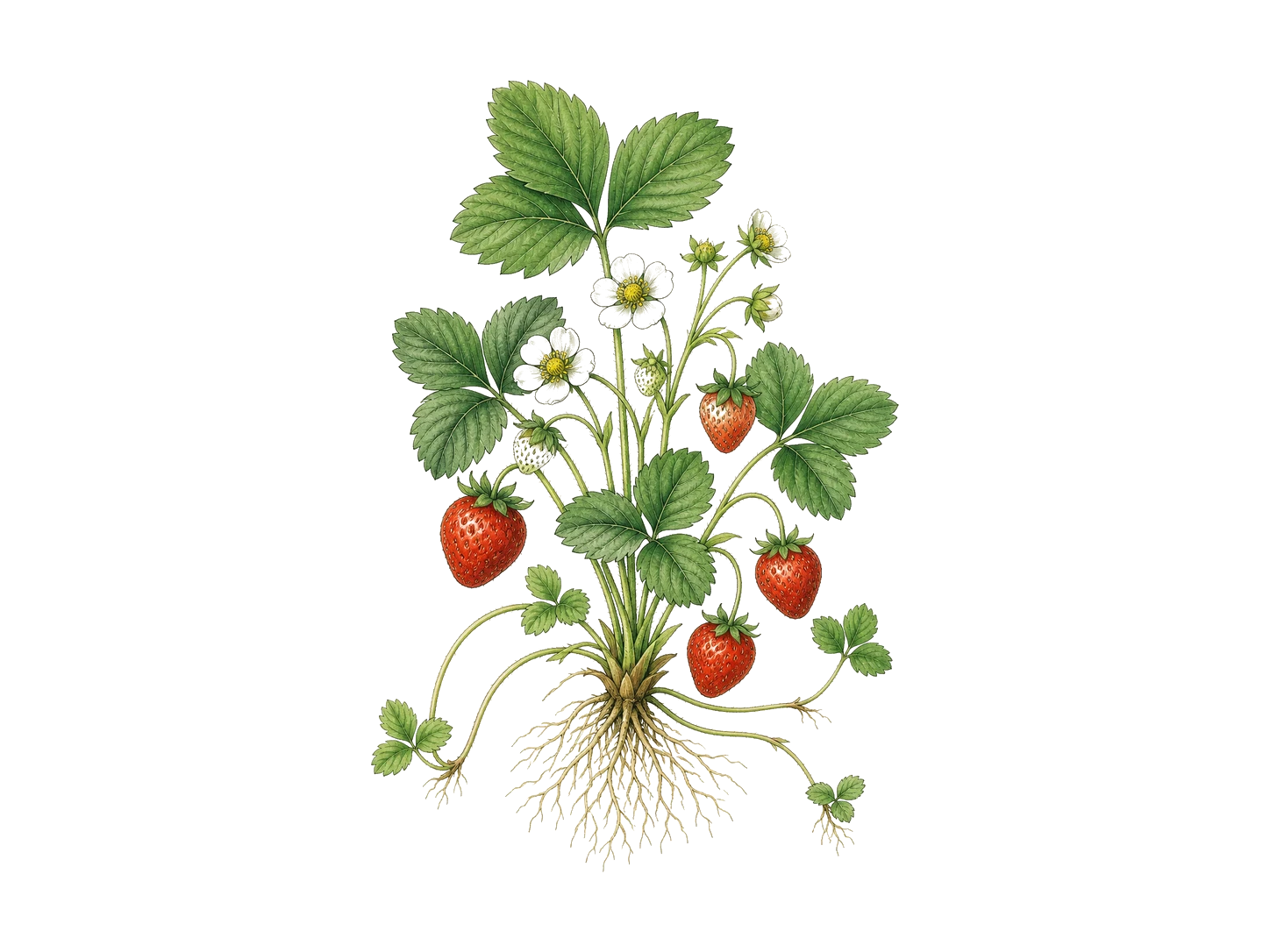
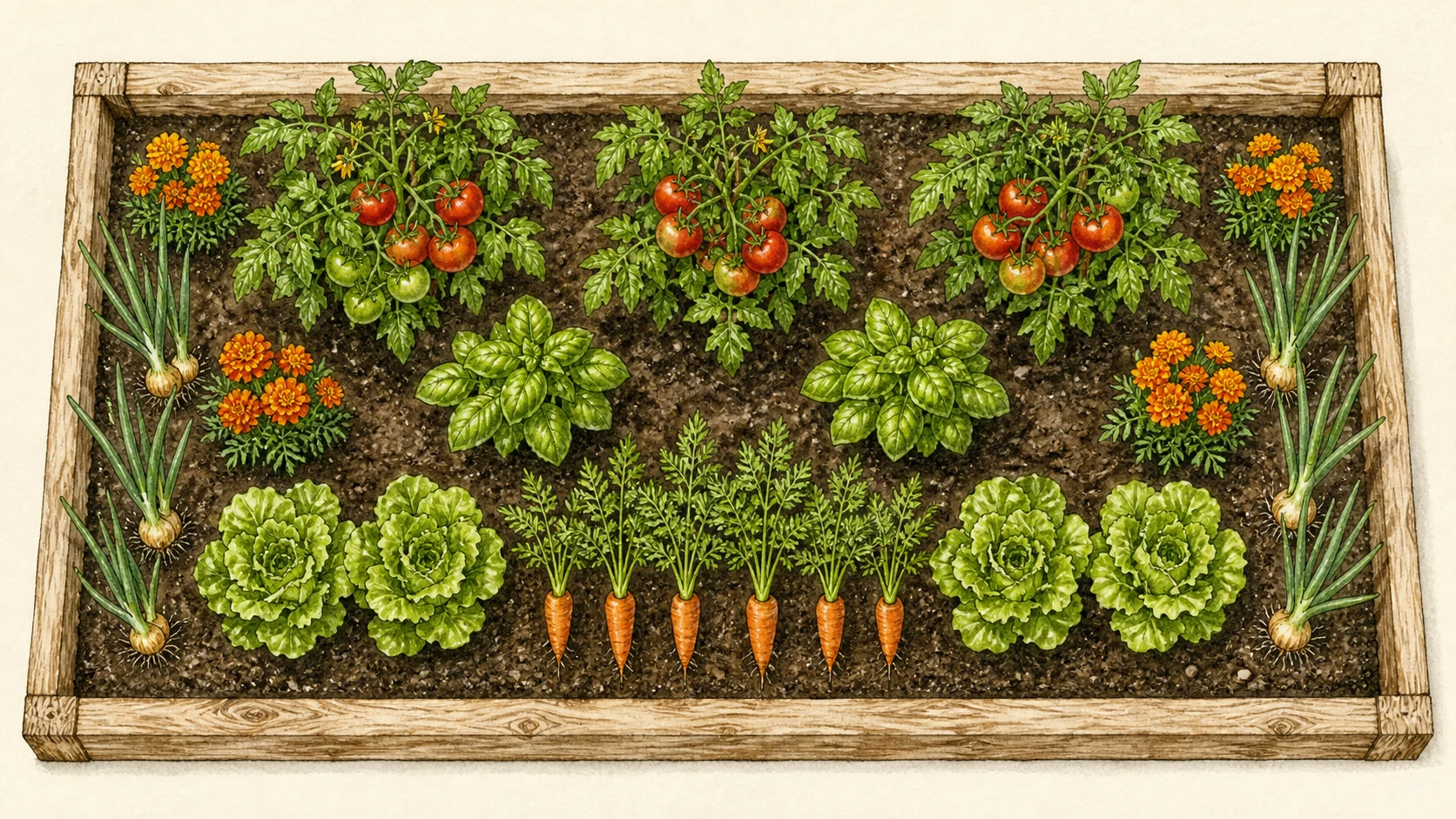
Evidence supports or conditionally supports growing strawberry with Sweet alyssum. Keep it apart from Potato, Tomato because of shares disease risk. 3 traditional pairings are listed separately because the review found no adequate evidence. 4 popular pairings have no verified relationship, which is not the same as safe or harmful.
Every status below has a direction, mechanism, context and source. "No verified relationship" means we looked and found nothing usable; the planner then evaluates spacing, light, water and timing normally. How we classify evidence →
Conditional benefit (1)
Positive only when the stated conditions match; otherwise informational.
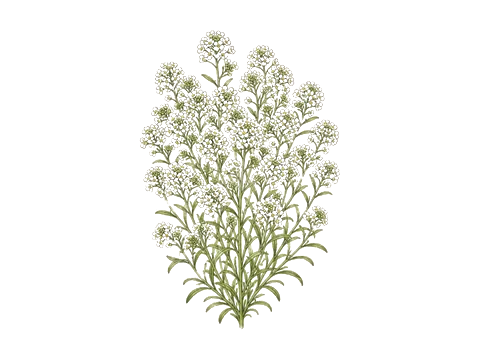
Sweet alyssumLobularia maritimaConditionalSupports beneficial insects · aphids Sweet alyssum may affect StrawberrySpring–Fall · strip · Within a few metres.Tier C Review: August 15, 2026Why?
Claim. Alyssum attracts hoverflies whose larvae eat aphids; an effect on strawberry aphids is plausible but untested.
Mechanism. Insectary flowers for aphid predators.
Conditions. Planted together Within a few metres. Both plants must be present at the same time.
Applies when. Indirect evidence from other crops.
Limitations. No strawberry-specific trial found.
Evidence. Tier C: Indirect evidence: greenhouse or pot work, a related crop or species, or credible extension guidance with important uncertainty. (field trial).
Reviewed August 15, 2026 by Garden Planner editorial team (pending independent horticultural review). Record sweet-alyssum--strawberry--insectary_support v1. Request a correction.
Traditional claim (3)
Never a hard rule; may appear as an optional experiment.
Traditional claims are shown separately because repetition across charts is not evidence. They never change a planner score; treat them as optional experiments.
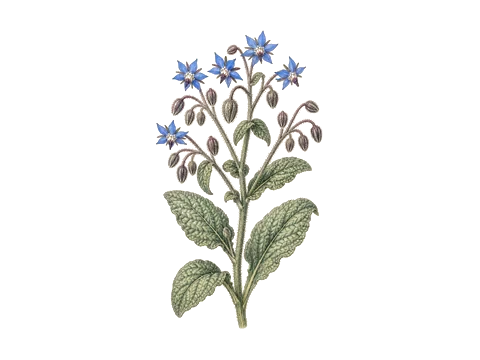
BorageBorago officinalisTraditionalFlavour or growth claim Borage may affect StrawberrySummer · arrangement unspecifiedTier D Review: August 15, 2026Why?
Claim. Borage is said to improve strawberry flavour and yield and to attract pollinators. Bee visits are real; the flavour and yield claim has no controlled evidence.
Mechanism. Proposed by tradition; not demonstrated in a controlled comparison.
Conditions. Planted together Both plants must be present at the same time.
Applies when. Optional experiment, not a guarantee.
Limitations. Borage shades low strawberry plants if planted too close.
Evidence. Tier D: Traditional knowledge or structured community observations without a controlled comparison. (tradition).
Reviewed August 15, 2026 by Garden Planner editorial team (pending independent horticultural review). Record borage--strawberry--flavor_or_growth v1. Request a correction.
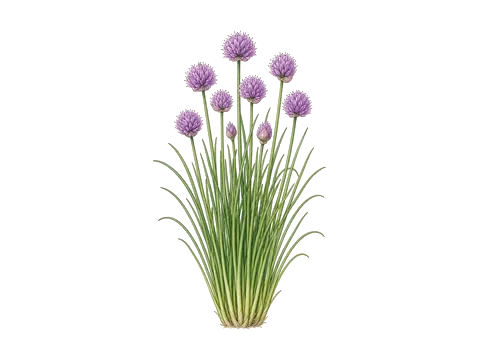
ChivesAllium schoenoprasumTraditionalPest suppression · aphids Chives may affect StrawberryPerennial · arrangement unspecifiedTier D Review: August 15, 2026Why?
Claim. Chives are said to deter aphids and improve strawberry health. No controlled evidence found.
Mechanism. Proposed by tradition; not demonstrated in a controlled comparison.
Conditions. Planted together Both plants must be present at the same time.
Applies when. Optional experiment, not a guarantee.
Limitations. Tradition only.
Evidence. Tier D: Traditional knowledge or structured community observations without a controlled comparison. (tradition).
Reviewed August 15, 2026 by Garden Planner editorial team (pending independent horticultural review). Record chives--strawberry--pest_suppression v1. Request a correction.
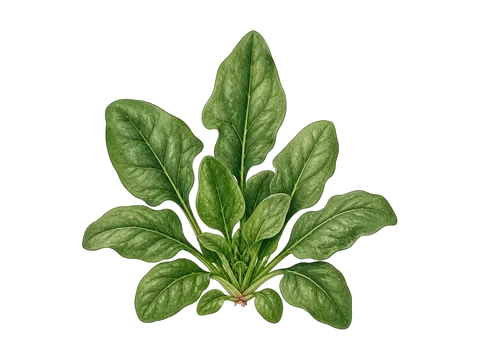
SpinachSpinacia oleraceaTraditionalSpace and shade complement Strawberry and Spinach affect each other (mutual)Spring–Fall · arrangement unspecifiedTier D Review: August 15, 2026Why?
Claim. Spinach and strawberries are said to grow well together. They are both low and cool-season, so they coexist without conflict, but no benefit has been shown.
Mechanism. Proposed by tradition; not demonstrated in a controlled comparison.
Conditions. Planted together Both plants must be present at the same time.
Applies when. Optional experiment, not a guarantee.
Limitations. Neutral fit, not a benefit.
Evidence. Tier D: Traditional knowledge or structured community observations without a controlled comparison. (tradition).
Reviewed August 15, 2026 by Garden Planner editorial team (pending independent horticultural review). Record spinach--strawberry--spatial_complement v1. Request a correction.
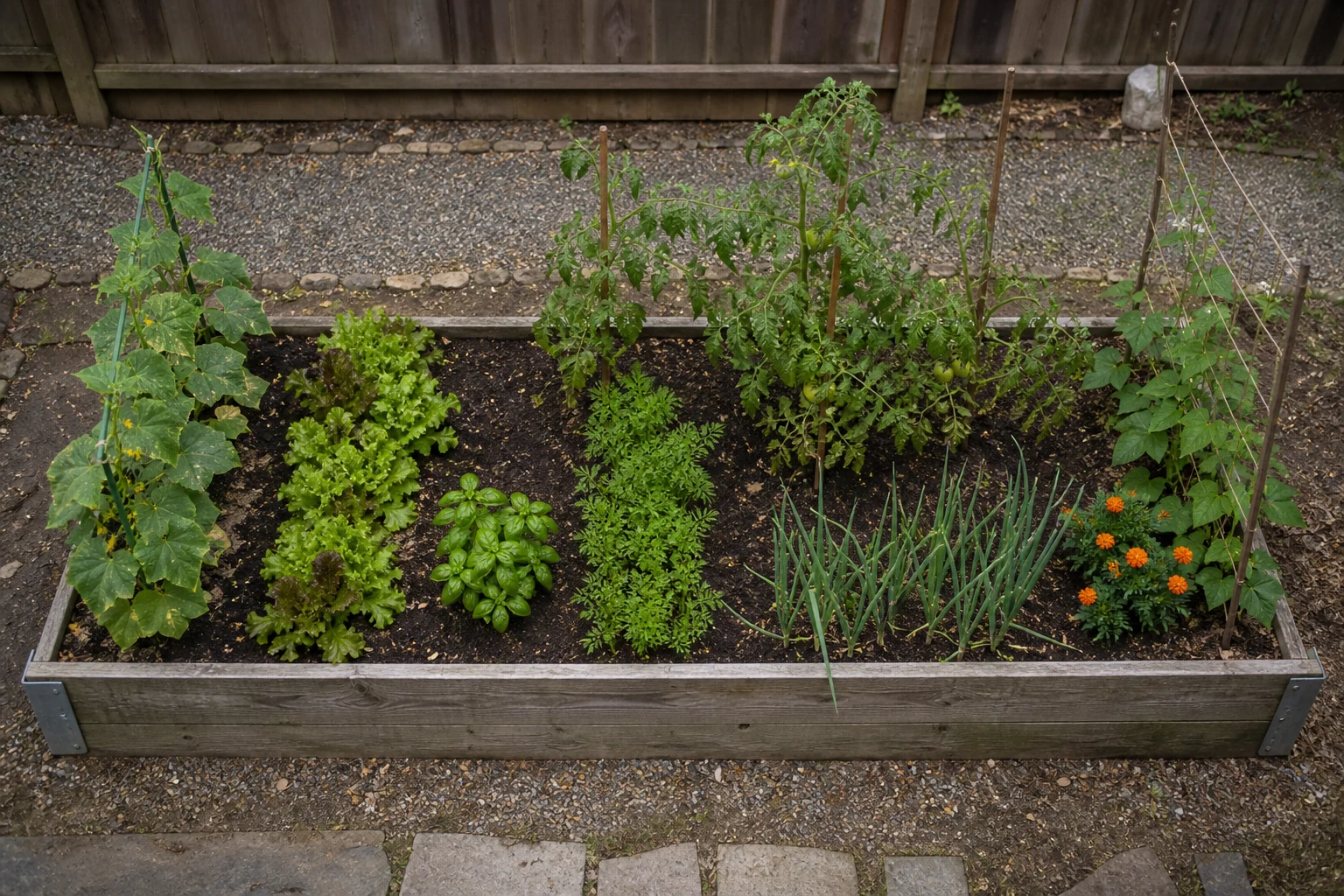
A realistic garden scene where strawberry grows beside a plant with a traditional or unknown relationship.Coexistence in a photograph is not evidence that the plants affect each other.
Avoid or separate (2)
Hard constraint only for serious, applicable conflicts; otherwise a weighted warning.
Avoid records need credible negative evidence or a clear cultural incompatibility. Hard constraints are marked in the Why? panel; the rest are weighted warnings with a remedy.
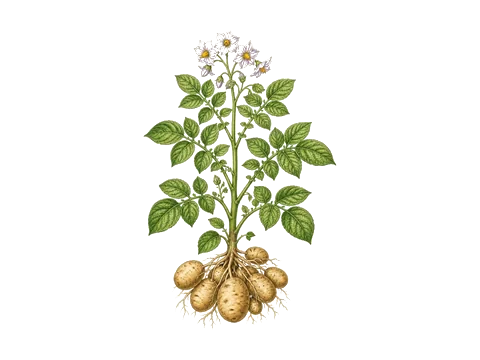
PotatoSolanum tuberosumAvoidShares disease risk · Verticillium wilt Strawberry and Potato affect each other (mutual)Spring–Fall · adjacent · Separate beds.Tier C Review: August 15, 2026Why?
Claim. Potatoes and strawberries share Verticillium wilt; avoid planting strawberries in beds that grew potatoes in the last three years.
Mechanism. Soil-borne pathogen.
Conditions. Planted together Separate beds. Both plants must be present at the same time.
Management. Keep bed history; Resistant cultivars.
Applies when. Rotation concern.
Limitations. Manageable.
Evidence. Tier C: Indirect evidence: greenhouse or pot work, a related crop or species, or credible extension guidance with important uncertainty. (extension synthesis).
Reviewed August 15, 2026 by Garden Planner editorial team (pending independent horticultural review). Record potato--strawberry--disease_risk v1. Request a correction.
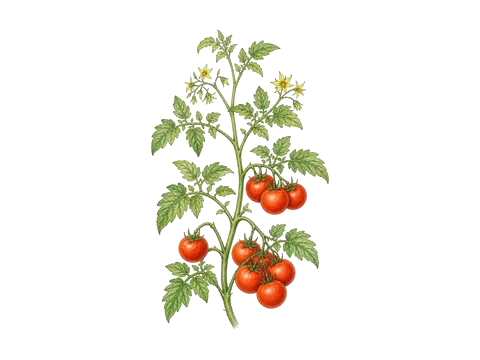
TomatoSolanum lycopersicumAvoidShares disease risk · Verticillium wilt Strawberry and Tomato affect each other (mutual)Summer · adjacent · Different beds; do not plant strawberr…Tier C Review: August 15, 2026Why?
Claim. Strawberries and tomatoes share Verticillium wilt, a soil-borne fungus. The main risk is planting strawberries where nightshades recently grew; adjacency in the same season adds a smaller risk through shared soil.
Mechanism. Soil-borne pathogen common to both hosts.
Conditions. Planted together Different beds; do not plant strawberries after tomatoes for 3 years. Both plants must be present at the same time.
Management. Choose resistant strawberry cultivars; Keep bed history.
Applies when. Mostly a rotation and bed-history concern.
Limitations. Manageable; many gardens never see Verticillium.
Evidence. Tier C: Indirect evidence: greenhouse or pot work, a related crop or species, or credible extension guidance with important uncertainty. (extension synthesis).
Reviewed August 15, 2026 by Garden Planner editorial team (pending independent horticultural review). Record tomato--strawberry--disease_risk v1. Request a correction.
No verified relationship (4)
Zero score and an honest unknown state. Spacing, light, water and timing are evaluated normally.
No verified relationship: we did not find a source that establishes a benefit or harm for these pairs. This is not the same as "compatible".
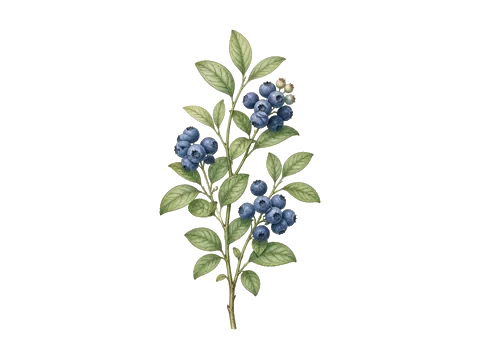
BlueberryVaccinium corymbosumNo verified relationshipOther Strawberry and Blueberry affect each other (mutual)Perennial · arrangement unspecifiedUnknown Review: August 15, 2026Why?
Claim. We did not find a source that establishes a benefit or harm between blueberry and strawberry.
Mechanism. None documented.
Conditions. Planted together Both plants must be present at the same time.
Applies when. The planner evaluates spacing, light, water and timing normally.
Limitations. Different soil pH needs; no companion relationship documented.
Evidence. Unknown: No source meeting the inclusion rules. (none).
Reviewed August 15, 2026 by Garden Planner editorial team (pending independent horticultural review). Record blueberry--strawberry--other v1. Request a correction.
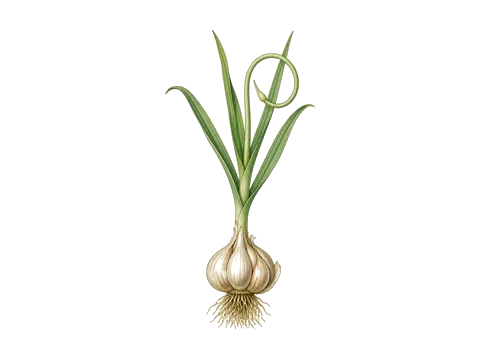
GarlicAllium sativumNo verified relationshipOther Strawberry and Garlic affect each other (mutual)Spring–Fall · arrangement unspecifiedUnknown Review: August 15, 2026Why?
Claim. We did not find a source that establishes a benefit or harm between garlic and strawberry.
Mechanism. None documented.
Conditions. Planted together Both plants must be present at the same time.
Applies when. The planner evaluates spacing, light, water and timing normally.
Limitations. Garlic interplanted with strawberries is sometimes recommended; no usable evidence was found.
Evidence. Unknown: No source meeting the inclusion rules. (none).
Reviewed August 15, 2026 by Garden Planner editorial team (pending independent horticultural review). Record garlic--strawberry--other v1. Request a correction.
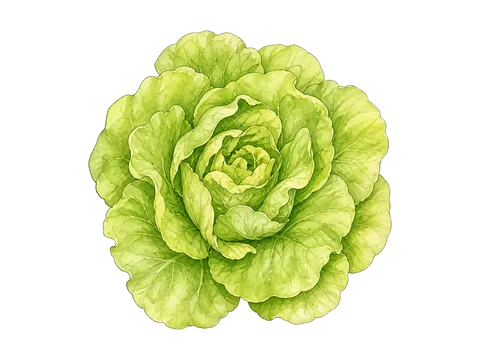
LettuceLactuca sativaNo verified relationshipOther Strawberry and Lettuce affect each other (mutual)Spring–Fall · arrangement unspecifiedUnknown Review: August 15, 2026Why?
Claim. We did not find a source that establishes a benefit or harm between lettuce and strawberry.
Mechanism. None documented.
Conditions. Planted together Both plants must be present at the same time.
Applies when. The planner evaluates spacing, light, water and timing normally.
Limitations. Both low and shallow-rooted; they compete for water but no relationship is documented.
Evidence. Unknown: No source meeting the inclusion rules. (none).
Reviewed August 15, 2026 by Garden Planner editorial team (pending independent horticultural review). Record lettuce--strawberry--other v1. Request a correction.
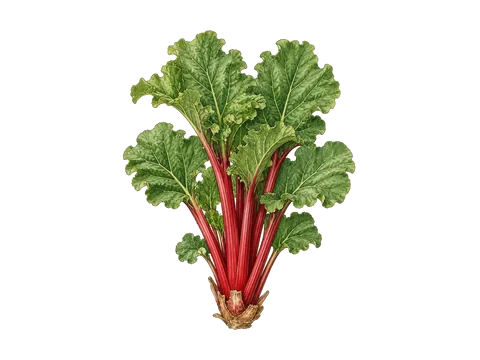
RhubarbRheum × hybridumNo verified relationshipOther Strawberry and Rhubarb affect each other (mutual)Perennial · arrangement unspecifiedUnknown Review: August 15, 2026Why?
Claim. We did not find a source that establishes a benefit or harm between rhubarb and strawberry.
Mechanism. None documented.
Conditions. Planted together Both plants must be present at the same time.
Applies when. The planner evaluates spacing, light, water and timing normally.
Limitations. Often grown together; no relationship documented.
Evidence. Unknown: No source meeting the inclusion rules. (none).
Reviewed August 15, 2026 by Garden Planner editorial team (pending independent horticultural review). Record rhubarb--strawberry--other v1. Request a correction.
No records match those filters
Reset the filters to see all 10 records.
Example layout for strawberry
Documented arrangement with Sweet alyssum: strip. Within a few metres. Planted together
Worked example based on the record, not a photograph of a trial.
Side view of strawberry (15–25 cm) beside typical companions, showing canopy, support, shade and access.
When these companions overlap
Bed occupancy in Portland, Oregon (estimates). A relationship only matters while both plants are present.
JFMAMJJASOND
Strawberry
Sweet alyssum20 wk overlap
Borage19 wk overlap
Chives21 wk overlap
Spinach23 wk overlap
Potato22 wk overlap
Tomato18 wk overlap
Blueberry23 wk overlap
Garlic23 wk overlap
Lettuce23 wk overlap
Rhubarb23 wk overlap
Overlap in weeks
Sweet alyssum
20 weeks
Borage
19 weeks
Chives
21 weeks
Spinach
23 weeks
Potato
22 weeks
Tomato
18 weeks
Blueberry
23 weeks
Garlic
23 weeks
Lettuce
23 weeks
Rhubarb
23 weeks
Crop rotation guidance
Rotation is about what occupied the bed in previous seasons and is calculated separately from the live companion relationships above.
Rotate strawberry on a 3-year cycle with other rose family crops (Raspberry). Shared risks: grey mould (Botrytis), Verticillium wilt, spotted wing drosophila.
Fit checks come from plant attributes and apply even when a pairing has a positive claim.
Community observations (anecdotal)
These reports come from gardeners and are not reviewed evidence. Results vary with soil, climate and practice. Community data never changes an evidence tier or a planner score.
Reports for strawberry: 0 (community submissions open in a later phase; drafts are stored only on your device).
Community-submitted photo area (moderated) with context fields: region, season, layout, varieties, outcome. Record an observation
Reviewer: Garden Planner editorial team (pending independent horticultural review). Status counts on the Companions A–Z page are derived from these records. Corrections.
Documentary and illustrated views distinguish identification, measured layout, seasonal overlap, mechanisms, coexistence examples, and community observations. Captions state what each visual can and cannot establish.
Our Methodology & Sources
We synthesize peer-reviewed research, university extension publications, and trusted horticulture resources. Our evidence levels help you understand how strong the science is behind the guidance.
Evidence tiers
Supported evidenceConsistent results from multiple robust studies
Traditional claimHistorical use reported, limited scientific support
Context dependentMixed or variable results across conditions
No verified relationshipNo reliable evidence identified