Cucumber and Blue Hubbard squash: a perimeter trap crop for cucumber beetles
Reviewed August 15, 2026 · Garden Planner editorial team (pending independent horticultural review)
Short answer. Probably, if you run it as the trials did. Striped cucumber beetles strongly prefer Blue Hubbard squash; planted as a perimeter one to two weeks before butternut squash, it intercepted arriving beetles and cut insecticide use on farms in Massachusetts and Connecticut. Cucumbers were not the tested main crop, so the record is conditional, Tier C. Unmanaged, the trap plants simply breed beetles.
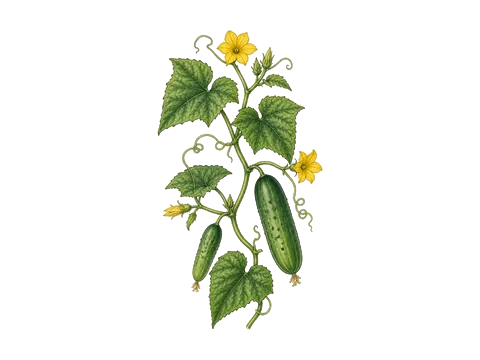
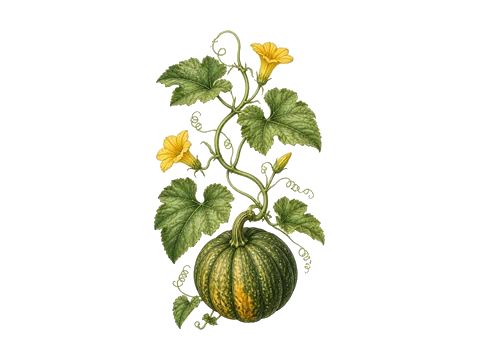
Direction of effect
Blue Hubbard squash → cucumber (trap crop). The trap crop itself is sacrificed.
Mechanism and outcome
Beetles arriving from overwintering sites meet the larger, more attractive Hubbard plants first and concentrate there; the beetles on the perimeter are then controlled. Outcome measured: beetle counts on the main crop and insecticide applications.
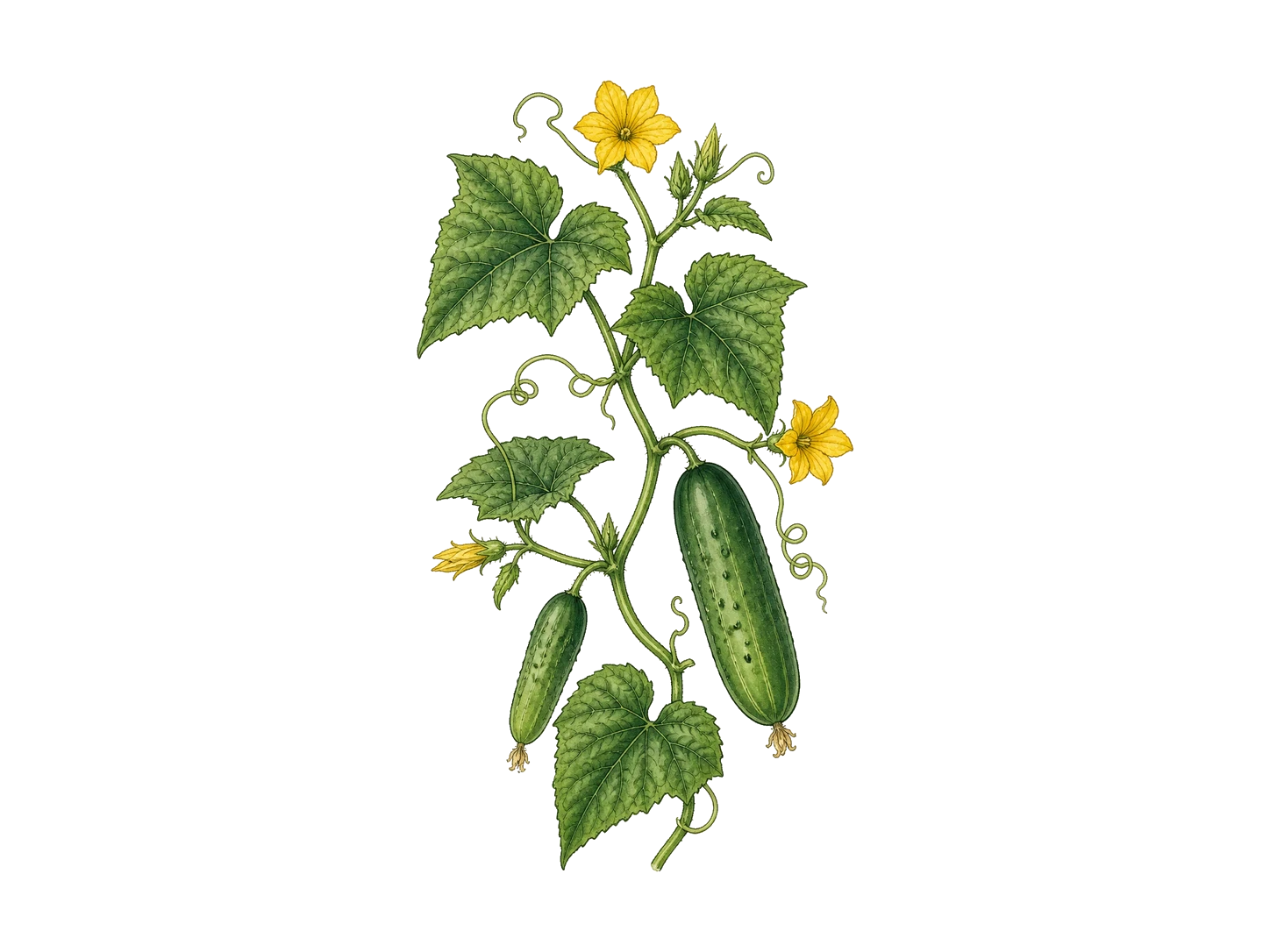
What was studied
On-farm trials of Blue Hubbard perimeters around butternut squash fields (Cavanagh et al. 2009); trap-crop principles reviewed by Shelton & Badenes-Perez (2006) and practitioner guidance from SARE.
Evidence records
| Record | Status | Effect | Tier | Arrangement | Sources |
|---|---|---|---|---|---|
winter-squash--cucumber--trap_crop | Conditional | Trap crop | Tier C | perimeter | cavanagh-2009, sare-trap-crops |
winter-squash--zucchini--trap_crop | Conditional | Trap crop | Tier C | perimeter | cavanagh-2009, sare-trap-crops |
Practical home-garden interpretation
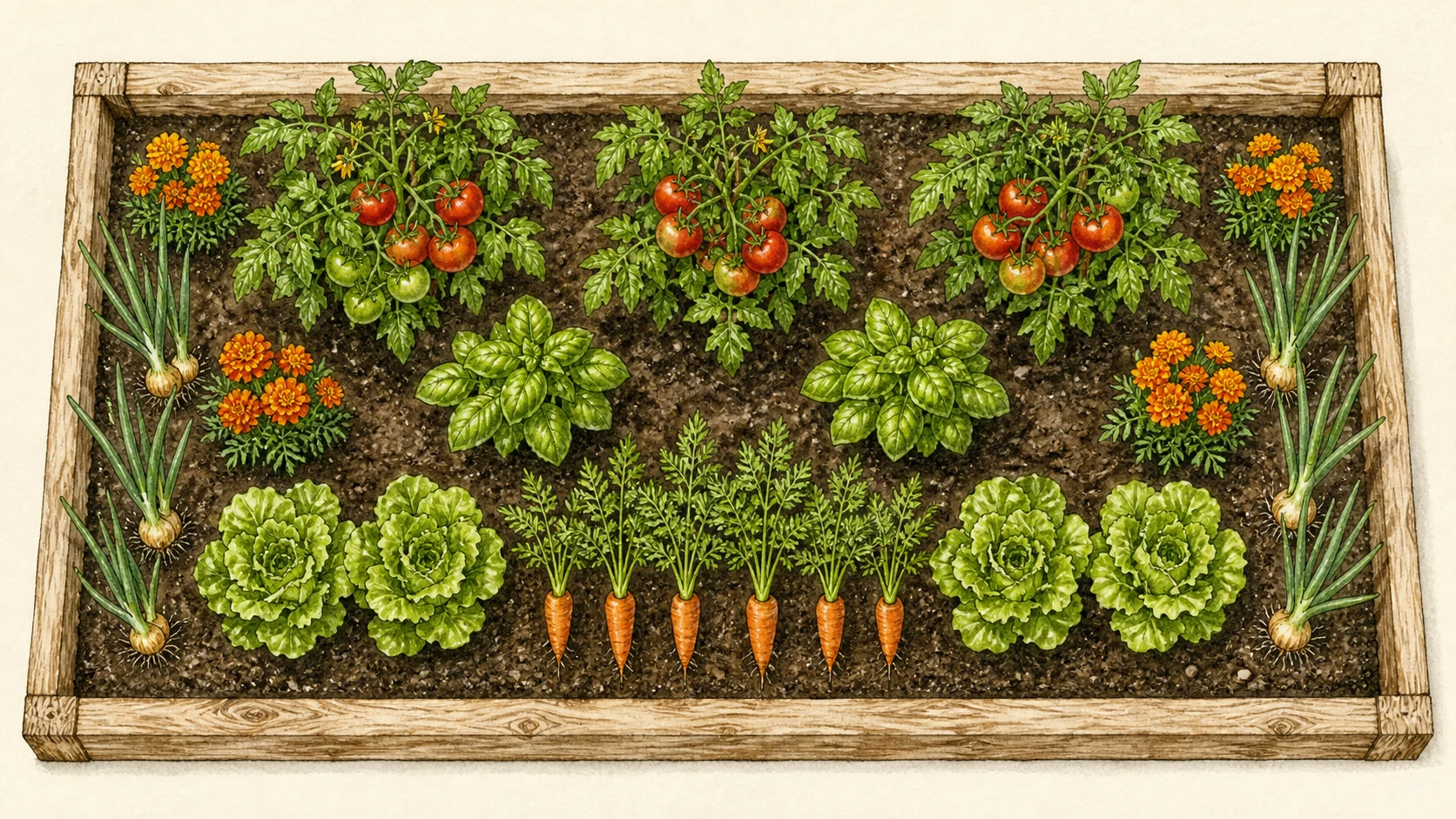
At home: three or four Blue Hubbard plants at the edge the beetles come from (usually the side nearest last year's cucurbits or rough ground), transplanted one to two weeks before the cucumbers, checked every few days, and the beetles on them removed by hand, vacuumed, or the plants pulled and bagged once the cucumbers are established. Row cover over the cucumbers until flowering is the other half of the strategy.
Exact conditions required
- Blue Hubbard cultivar specifically.
- Perimeter position on the arrival side, 1–2 m from the crop.
- Established 1–2 weeks before the cucumbers.
- Weekly monitoring and removal of beetles on the trap plants.
- Cucumbers covered with mesh until first female flowers.

Benefits, costs and uncertainty
Benefits
- Fewer beetles reaching the cucumbers in the studied system.
- Lower bacterial-wilt risk if beetles are intercepted.
- Reduced or targeted spraying.
Costs
- Space and effort for sacrificial plants.
- Trap plants become a nursery if not managed.
- Extrapolated from butternut to cucumber.
Uncertainty. Not tested on cucumbers or at home scale; beetle pressure and arrival direction vary.
Simultaneous pairing versus rotation
Both are cucurbits: rotate the whole group (two-year gap) and remove all cucurbit debris where beetles overwinter.
Alternative strategies
- Mesh cover until flowering (reliable).
- Wilt-resistant cucumber cultivars.
- Transplants rather than direct sowing.
- Yellow sticky traps near seedlings.
Use this arrangement in the planner
Adds both plants to a plan; set the role (perimeter, strip, undersown) on the crop list so the engine can match the documented arrangement.
Add cucumber and winter squash to a planCommunity observations (anecdotal)
Reports from gardeners are kept apart from the reviewed evidence above and never change its status. None yet for this pair. Record an observation.
Sources
- Cavanagh, A., Hazzard, R., Adler, L. S., Boucher, J. (2009). Using trap crops for control of Acalymma vittatum (Coleoptera: Chrysomelidae) reduces insecticide use in butternut squash. Journal of Economic Entomology. A perimeter of Blue Hubbard squash intercepted striped cucumber beetles arriving at butternut squash fields, reducing insecticide use when the trap crop itself was treated. The system requires the trap crop to be established before the main crop and managed.
- Shelton, A. M., Badenes-Perez, F. R. (2006). Concepts and applications of trap cropping in pest management. Annual Review of Entomology. Successful trap cropping depends on the pest's preference, the trap crop's attractiveness over time, arrangement (usually perimeter), and on destroying pests in the trap crop; most failures come from ignoring one of these.
- Sustainable Agriculture Research and Education (SARE) (2009). Using trap crops to reduce pests. SARE / USDA. A trap crop works only when the pest clearly prefers it, it is planted earlier or at the perimeter where pests arrive, it is monitored, and the pests it collects are destroyed before they move to the main crop.
- University of Minnesota Extension (2023). Managing plant diseases in the home garden. University of Minnesota Extension. Explains sanitation, rotation, spacing for airflow, resistant cultivars and watering practice as the core of home-garden disease management.
Change history: repository commits touching src/data/pairs.json and the records above. Request a correction.