How to Run a Simple Garden Comparison
6 min read · Reviewed August 15, 2026 · Garden Planner editorial team (pending independent horticultural review)
Why most garden “experiments” prove nothing
A bed of tomatoes with basil did well this year. Compared with what? Last year’s weather, a different cultivar, a different bed? Without a matched comparison grown at the same time, there is no way to separate the companion from everything else.
A design that works
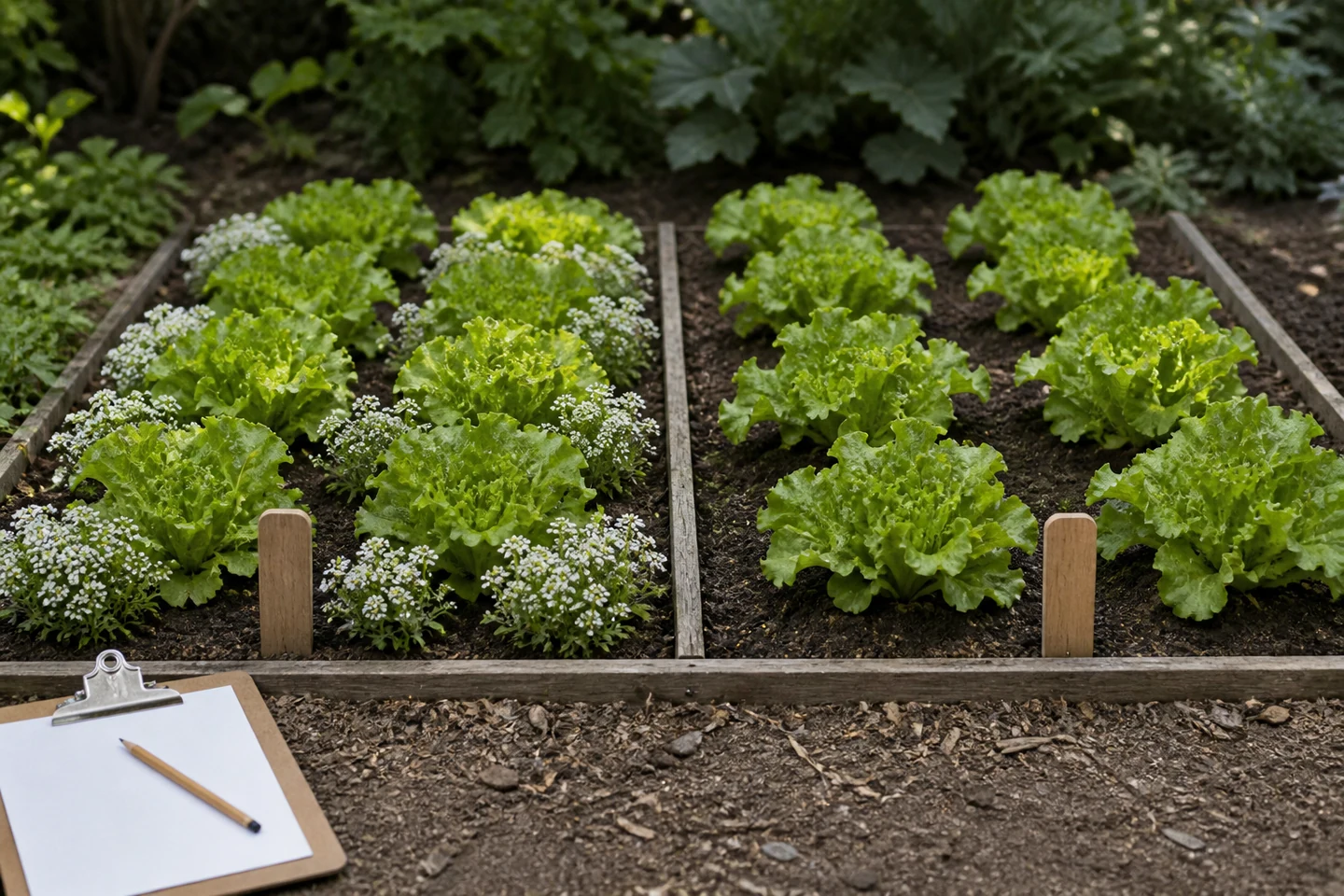
- One question. “Do aphid counts on lettuce fall when alyssum is interplanted?”
- Paired plots. Two identical plots side by side, same soil, sun, water, cultivar and planting date. The only difference is the companion. Four pairs are better than one; two is the minimum for any confidence.
- Prediction in writing. Before planting, write what you expect to change and by how much.
- Counts, not impressions. Pick a measure you can count: aphids on five marked leaves per plot, number of fruit, weight of harvest. Count on fixed dates.
- Keep the other variables boring. Same watering schedule, same feeding, same weeding.
- Write down what went wrong. Heatwave, slug invasion, the dog.
Reading the result
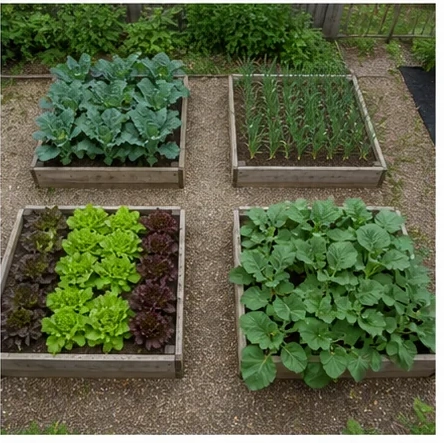
With two pairs, a difference needs to be large and consistent in both to mean anything. Report the numbers, the dates, the cultivar, the region and the weather. A single season in one garden is an observation, not a rule; that is exactly what the community observation form records, separately from the reviewed evidence.
What not to claim
- Not “alyssum repels aphids” but “aphid counts were lower in the alyssum plots in my garden in 2026.”
- Not flavour, unless you ran a blind tasting.
- Not yield, unless you weighed it.
Sources
- University of Minnesota Extension (2023). Companion planting in home gardens. University of Minnesota Extension. Separates companion practices with research support (for example trap crops, insectary plants and physical support) from traditional pairings whose origins are hard to identify, and cautions that many popular charts are not evidence-based.
- Letourneau, D. K., et al. (2011). Does plant diversity benefit agroecosystems? A synthetic review. Ecological Applications. Diversified cropping systems generally reduced herbivore pests and increased natural enemies compared with monocultures, with crop damage lower on average; yield responses were mixed.
Reviewer: Garden Planner editorial team (pending independent horticultural review). Last substantive review August 15, 2026. Request a correction · Methodology