Allelopathy: Why Lab, Pot and Field Evidence Differ
6 min read · Reviewed August 15, 2026 · Garden Planner editorial team (pending independent horticultural review)
Definition
Allelopathy is chemical inhibition of one plant by another through compounds released into the environment. It is a real phenomenon: some rye and sorghum residues suppress weed seedlings, and marigold roots produce compounds toxic to certain nematodes.
Why most claims fail
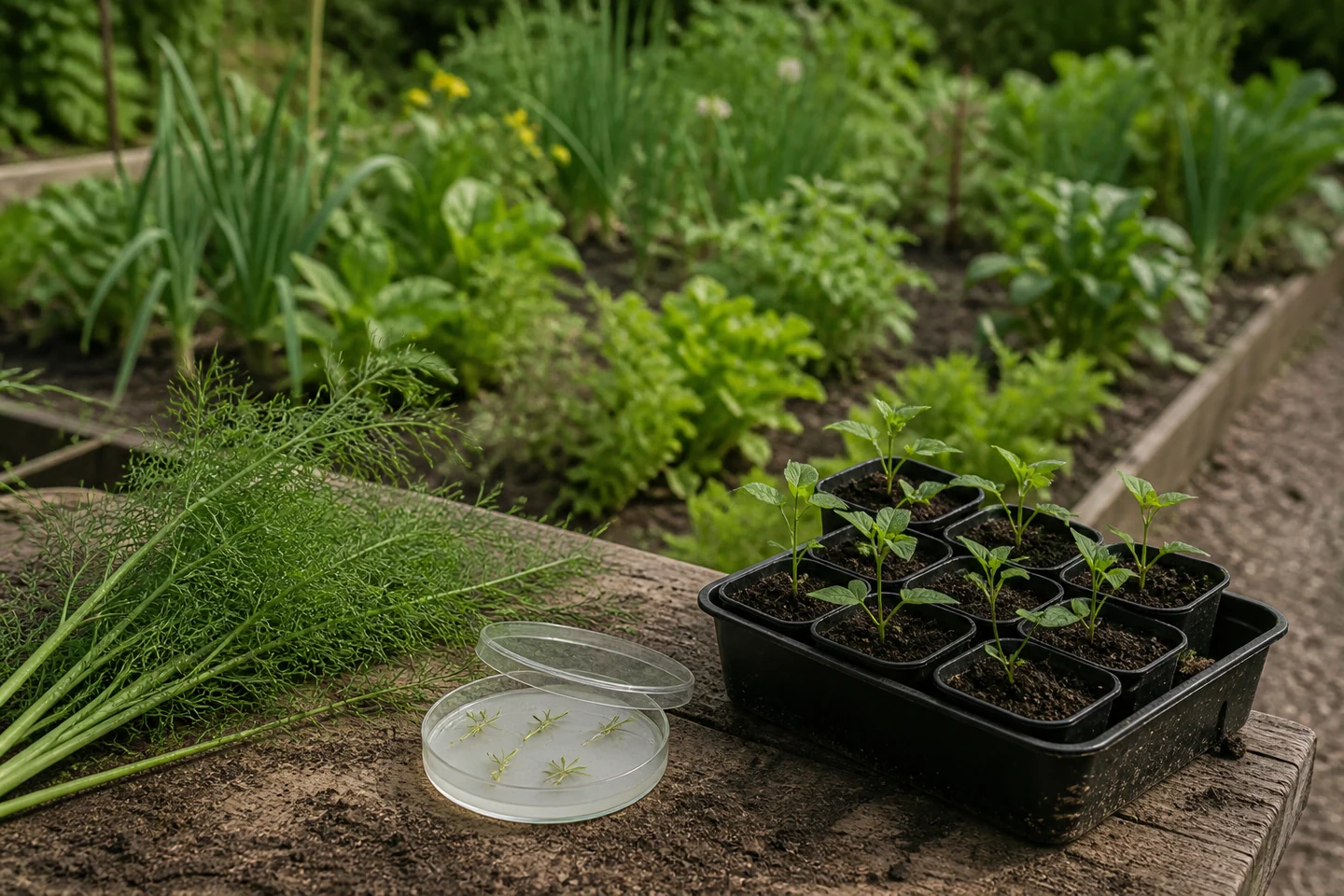
Reviews of allelopathy methods show a consistent pattern. A laboratory test grinds leaves, makes an extract and pours it on seeds in a dish; germination drops; a paper reports inhibition. In soil, the chemical is released slowly, diluted, bound to clay and organic matter, and broken down by microbes. To prove a field effect you must show that the compound is present in soil at an active concentration, and that the effect persists when competition for light, water and nutrients is removed. Few garden claims meet that bar.
The usual suspects
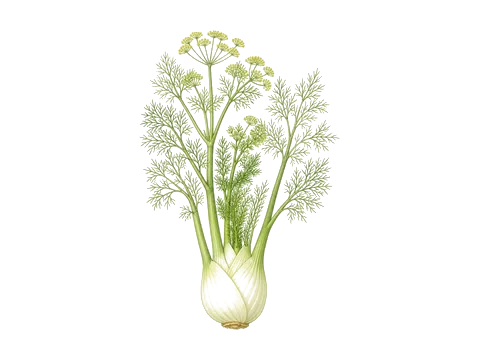
- Fennel. Extracts inhibit seeds in dishes. No field study at garden spacing. Fennel is tall, deep-rooted and thirsty; the plants beside it are usually shaded and dry.
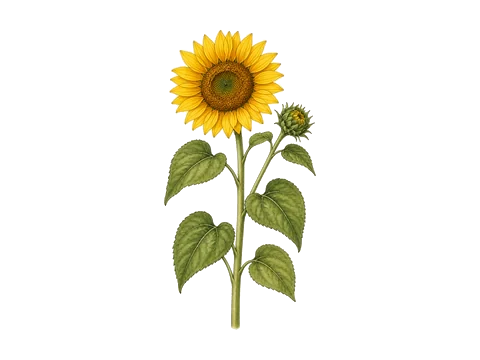
- Sunflower. Hull and residue extracts inhibit some seeds; a few field reports of reduced weeds under dense stands. Garden neighbours mainly suffer shade and water competition.
- Black walnut. Juglone is real and the best-documented case, but its effect depends on soil drainage and is strongest for a few sensitive species such as tomato under the canopy. Not in this catalog.
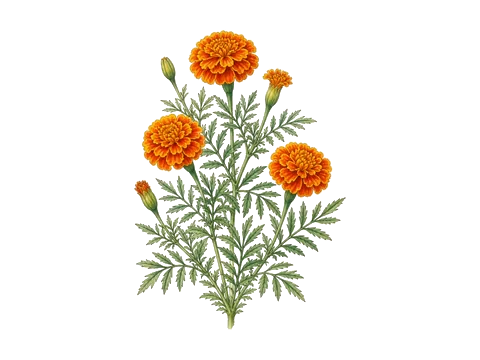
- Marigold. The nematode effect is a root exudate that needs a dense stand for a season; it is a soil treatment before the crop, not a neighbour effect.
How the catalog handles it
Every allelopathy record must say whether its evidence is laboratory, pot or field. Laboratory-only claims are listed as traditional. The planner does not separate plants on them.
Test it yourself
If you suspect a plant is suppressing a neighbour, move the suspect’s shade and water out of the equation: grow the neighbour in two matched containers, one with a pot of the suspect beside it and one without, both in full sun and watered the same. If they still differ, you have something worth reporting.
Sources
- Duke, S. O. (2015). Proving allelopathy in crop–weed interactions. Weed Science. Laboratory and pot bioassays frequently overstate allelopathy; proving a field effect requires showing the chemical is released at active concentrations in soil and that competition has been excluded. Most popular allelopathy claims have not met that bar.
- Hooks, C. R. R., Wang, K.-H., Ploeg, A., McSorley, R. (2010). Using marigold (Tagetes spp.) as a cover crop to protect crops from plant-parasitic nematodes. Applied Soil Ecology. Marigolds suppress some root-knot nematodes mainly when grown as a dense cover crop before the susceptible crop; as an interplanted companion the effect is smaller and cultivar-dependent.
- University of Minnesota Extension (2023). Companion planting in home gardens. University of Minnesota Extension. Separates companion practices with research support (for example trap crops, insectary plants and physical support) from traditional pairings whose origins are hard to identify, and cautions that many popular charts are not evidence-based.
Reviewer: Garden Planner editorial team (pending independent horticultural review). Last substantive review August 15, 2026. Request a correction · Methodology