Cucumber Beetles and Bacterial Wilt
5 min read · Reviewed August 15, 2026 · Garden Planner editorial team (pending independent horticultural review)
Identify
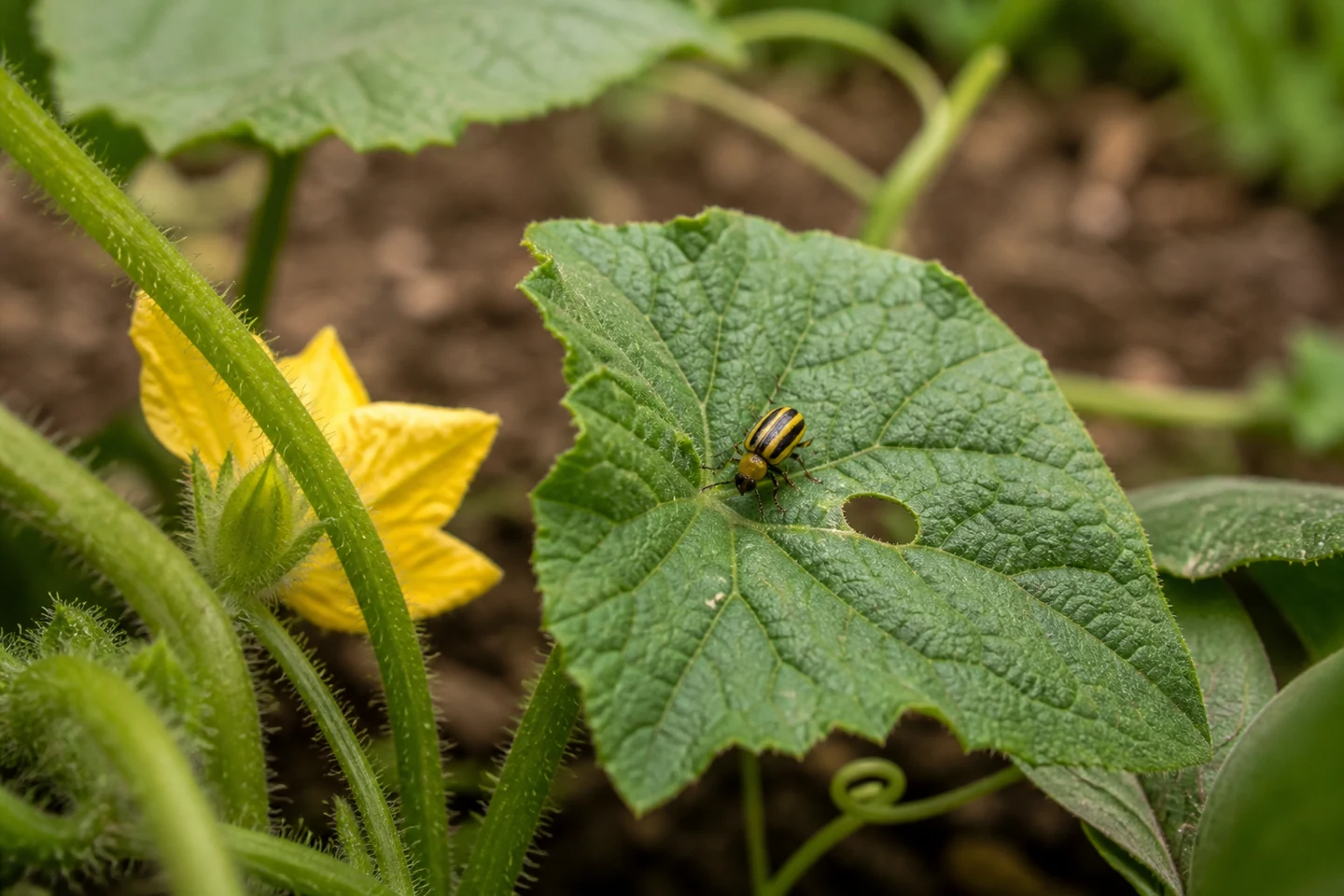
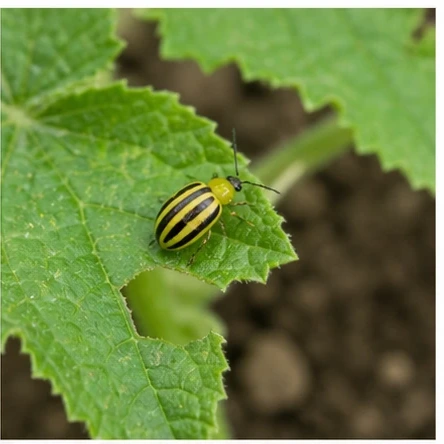
Striped (three black stripes) and spotted (twelve spots) yellow beetles about 6 mm long, feeding on cotyledons, leaves, flowers and fruit skin. The serious harm is bacterial wilt, carried in the beetle’s gut: a vine wilts on a hot afternoon, recovers overnight, then collapses for good within a week. Cut a wilted stem and press: a sticky string of bacterial ooze confirms it.
Prevention
- Transplant rather than direct sow where beetles are bad; larger plants tolerate feeding.
- Fine mesh over hoops from planting until the first female flowers, then remove for bees.
- Resistant or tolerant cultivars where available; wilt-resistant cucumbers exist.
- Remove crop debris in autumn where adults overwinter.
The trap crop that was tested
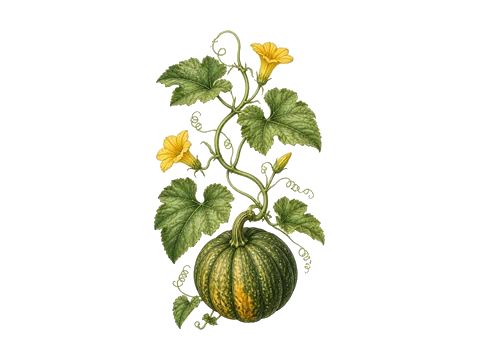
On farms in Massachusetts and Connecticut, a perimeter of Blue Hubbard squash planted one to two weeks before butternut fields intercepted arriving beetles; treating only the perimeter cut insecticide use. At home scale: a few Blue Hubbard plants at the edge the beetles come from, planted earlier, checked weekly, and the beetles on them removed or the plants pulled and bagged. Without that step the trap plants feed the population.
Claims without evidence
Radishes, nasturtiums, tansy and marigolds around cucumbers are traditional. No controlled trial shows reduced beetle numbers on the cucumbers.
Management
Hand-pick in the cool early morning when beetles are sluggish; yellow sticky traps near seedlings; kaolin clay coatings as a deterrent; remove and destroy wilted plants promptly.
Sources
- Cavanagh, A., Hazzard, R., Adler, L. S., Boucher, J. (2009). Using trap crops for control of Acalymma vittatum (Coleoptera: Chrysomelidae) reduces insecticide use in butternut squash. Journal of Economic Entomology. A perimeter of Blue Hubbard squash intercepted striped cucumber beetles arriving at butternut squash fields, reducing insecticide use when the trap crop itself was treated. The system requires the trap crop to be established before the main crop and managed.
- Sustainable Agriculture Research and Education (SARE) (2009). Using trap crops to reduce pests. SARE / USDA. A trap crop works only when the pest clearly prefers it, it is planted earlier or at the perimeter where pests arrive, it is monitored, and the pests it collects are destroyed before they move to the main crop.
- University of California Statewide Integrated Pest Management Program (2025). Home, garden, turf and landscape pests. UC Agriculture and Natural Resources. Pest biology and host ranges, including that corn earworm and tomato fruitworm are the same insect (Helicoverpa zea) and that late blight affects both potato and tomato.
- University of Minnesota Extension (2023). Managing plant diseases in the home garden. University of Minnesota Extension. Explains sanitation, rotation, spacing for airflow, resistant cultivars and watering practice as the core of home-garden disease management.
Reviewer: Garden Planner editorial team (pending independent horticultural review). Last substantive review August 15, 2026. Request a correction · Methodology