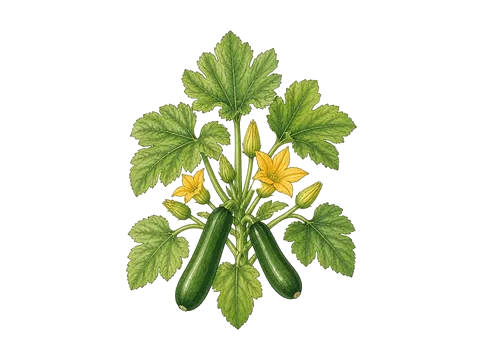
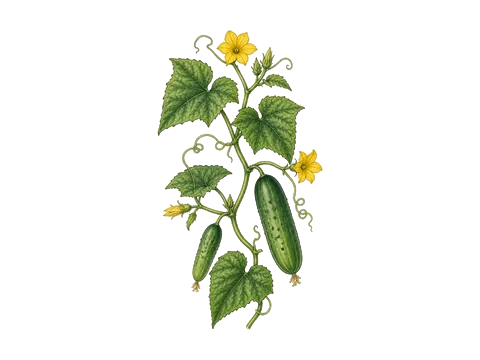
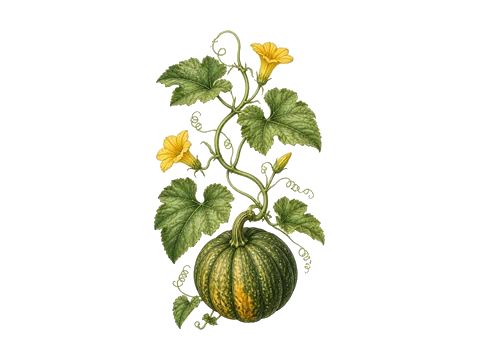
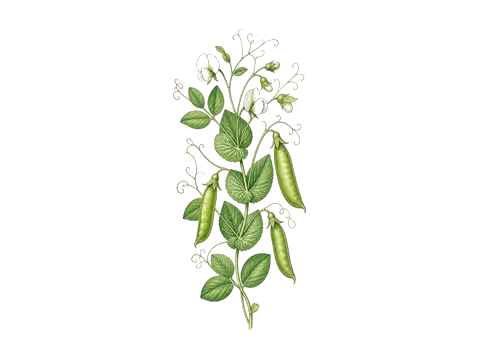
Powdery Mildew on Squash, Cucumbers and Peas
5 min read · Reviewed August 15, 2026 · Garden Planner editorial team (pending independent horticultural review)
Identify
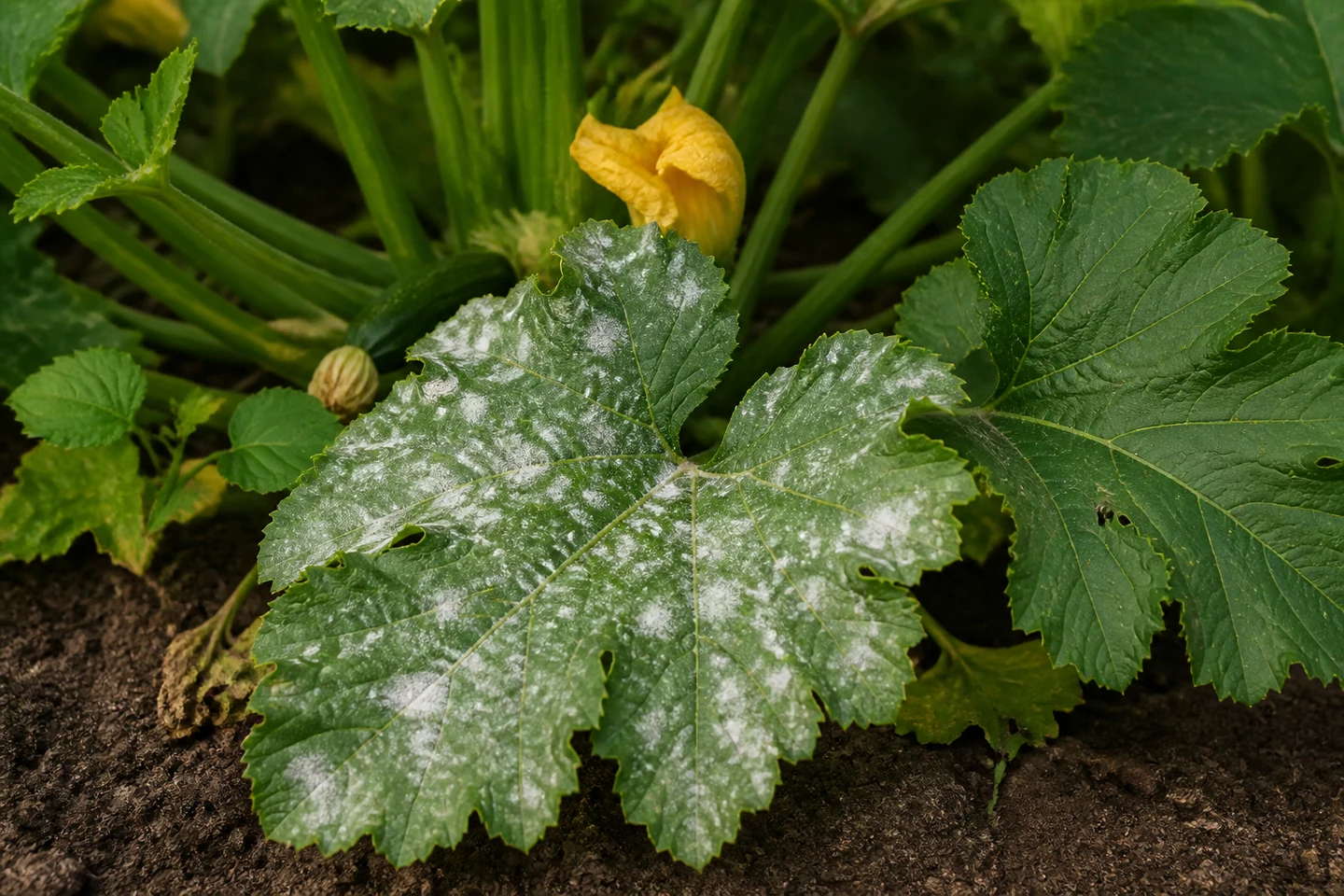
White or grey powdery patches on the upper leaf surface, spreading to cover leaves that yellow and dry. Unlike most fungal diseases it does not need wet leaves; warm days, cool nights and shade favour it. Downy mildew, a different disease, shows yellow angular patches on top with grey fuzz beneath, and needs wet leaves.
Prevention
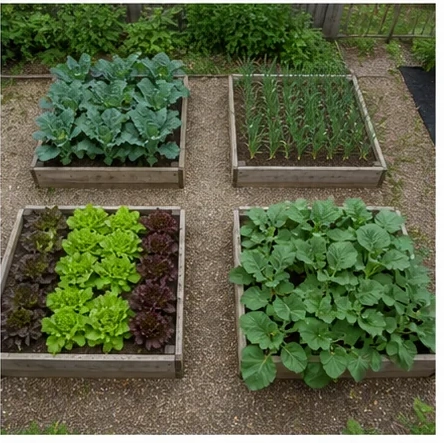
- Full spacing (zucchini 90 cm, cucumbers trellised) for airflow and sun.
- Resistant cultivars (labelled PM or PMR); this is the most effective measure.
- Steady water at the root; drought-stressed plants succumb faster.
- Avoid excess nitrogen.
- Remove crop debris in autumn.
Management
Remove the worst leaves early and bin them. Sprays of potassium bicarbonate or horticultural oil suppress spread if applied at the first spots, weekly; milk sprays have some support in trials but are inconsistent. None cures existing patches. On late-summer squash it is usually reasonable to let it run while harvesting what remains.
Companion notes
No plant has been shown to reduce powdery mildew on a neighbour. Crowding is the main cause the planner can address: it reserves each cucurbit’s full footprint and flags vines sprawling over other crops.
Sources
- University of Minnesota Extension (2023). Managing plant diseases in the home garden. University of Minnesota Extension. Explains sanitation, rotation, spacing for airflow, resistant cultivars and watering practice as the core of home-garden disease management.
- University of California Statewide Integrated Pest Management Program (2025). Home, garden, turf and landscape pests. UC Agriculture and Natural Resources. Pest biology and host ranges, including that corn earworm and tomato fruitworm are the same insect (Helicoverpa zea) and that late blight affects both potato and tomato.
- Royal Horticultural Society (2025). Grow Your Own vegetables, herbs and fruit. Royal Horticultural Society. Cultivation guidance for cool-temperate maritime climates, including sowing months, spacing, support and container suitability.
Reviewer: Garden Planner editorial team (pending independent horticultural review). Last substantive review August 15, 2026. Request a correction · Methodology