Late Blight on Tomato and Potato
6 min read · Reviewed August 15, 2026 · Garden Planner editorial team (pending independent horticultural review)
Identify
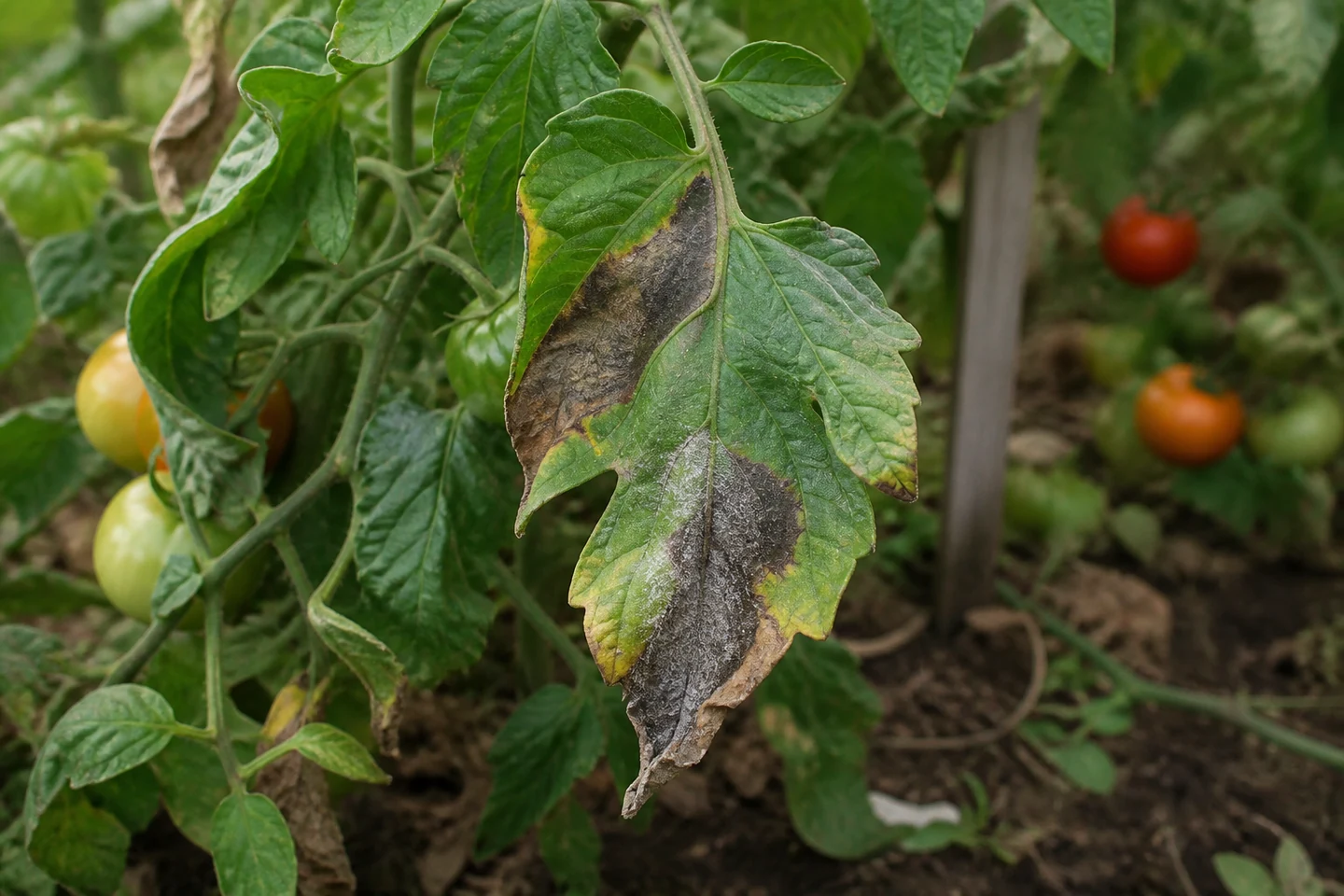
Large, irregular grey-green then brown blotches on leaves, often with a pale halo and, in humid mornings, a white fuzz on the underside. Dark lesions on stems. Firm, brown, greasy rot on tomato fruit and under potato skins. Whole plants collapse within days in wet weather. Early blight (Alternaria), by contrast, makes smaller target-like rings on lower leaves and progresses slowly.
Why tomato and potato are kept apart
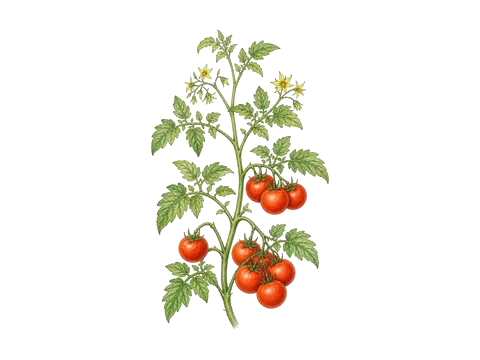
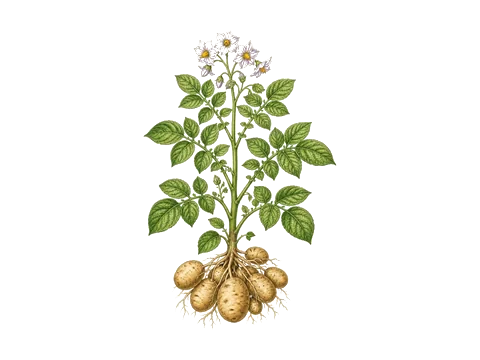
The same organism infects both. Infected potato foliage, volunteer potatoes and discarded tubers are the usual source of the first tomato infections in a garden; spores then travel on wind and rain. That is a shared-disease adjacency risk in the same season (an avoid record, hard constraint where blight occurs) and a rotation issue between seasons. It is not a “companion” question.
Prevention
- Separate beds, as far apart as the garden allows.
- Certified seed potatoes; remove volunteers.
- Resistant cultivars (several modern tomatoes and potatoes carry resistance genes).
- Spacing and pruning for airflow; stake or trellis tomatoes; remove lower leaves.
- Water the soil in the morning; never the foliage in the evening.
- Mulch to stop soil splash.
- Three-year nightshade rotation.
When it arrives
Remove infected leaves at once in dry weather; if more than a small part of a plant is affected, remove the whole plant and bin or bury it deeply, never compost it. Harvest unaffected green tomatoes to ripen indoors. Cut potato haulms and wait two weeks before lifting so spores on the surface die. Copper-based fungicides offer some protection if applied before infection in a wet spell; they do not cure.
Regional note
Late blight needs cool, wet conditions. Dry-summer regions see it rarely; maritime and humid-summer regions should treat every wet July week as a risk.
Sources
- University of Minnesota Extension (2023). Managing plant diseases in the home garden. University of Minnesota Extension. Explains sanitation, rotation, spacing for airflow, resistant cultivars and watering practice as the core of home-garden disease management.
- University of California Statewide Integrated Pest Management Program (2025). Home, garden, turf and landscape pests. UC Agriculture and Natural Resources. Pest biology and host ranges, including that corn earworm and tomato fruitworm are the same insect (Helicoverpa zea) and that late blight affects both potato and tomato.
- University of Minnesota Extension (2023). Living soil, healthy garden: crop rotation and soil health. University of Minnesota Extension. Recommends rotating plant families between seasons to interrupt soil-borne disease and pest cycles, and explains how rotation differs from planting companions together.
Reviewer: Garden Planner editorial team (pending independent horticultural review). Last substantive review August 15, 2026. Request a correction · Methodology