Living Mulch: Ground Cover Between Crops
6 min read · Reviewed August 15, 2026 · Garden Planner editorial team (pending independent horticultural review)
What it is
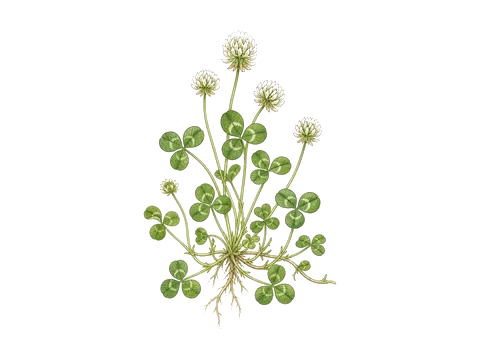
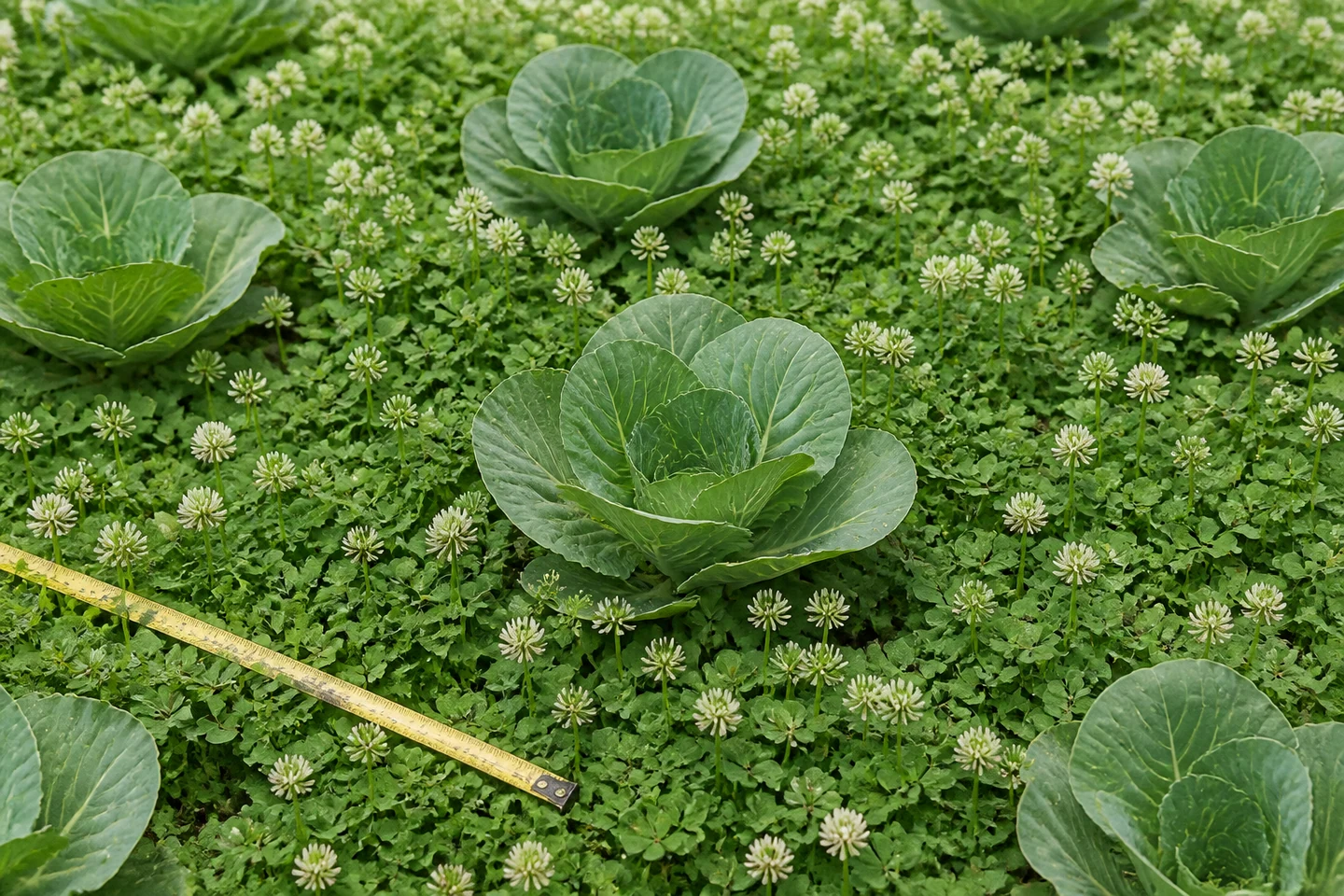
A living mulch is a low plant sown between and under a crop to cover the soil while the crop grows. White clover is the classic choice under brassicas: low, perennial, nitrogen-fixing and tolerant of mowing.
The evidence
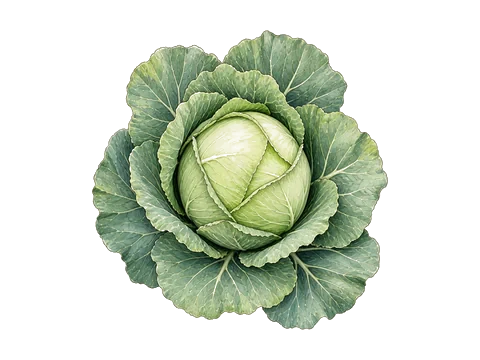
Brassica pests such as cabbage root fly find their host by a series of landings. On bare soil, most landings hit cabbage. On a clover background, many landings hit clover, the fly’s “inappropriate landing” count rises and it leaves. Field experiments in the UK and the Netherlands recorded lower egg-laying and pest infestation on undersown cabbage. The 2023 meta-analysis of cabbage intercropping pooled these and similar trials: pest injury substantially lower, productivity modestly lower on average.
The cost
Clover competes for water and nitrogen at the surface. Unmanaged, it reduced cabbage head size. The trials that limited the cost did one of three things: sowed the clover two to four weeks after transplanting the cabbage, mowed it whenever it reached about 15 cm, or kept it in strips rather than full cover.
Nitrogen
Clover fixes nitrogen, but reviews show little of it reaches a neighbour while the clover is alive. The fertility benefit arrives when the mulch is mown (clippings decompose) or dug in at the end of the season.
How to do it at home
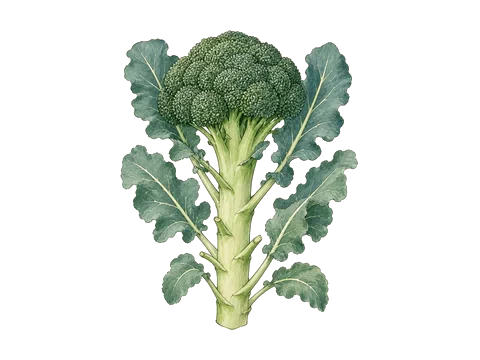
- Transplant cabbage or broccoli at normal spacing.
- Two to four weeks later, broadcast white clover thinly between plants and rake it in; water.
- Mow or shear to 5 cm whenever it reaches 15 cm.
- Keep the crop watered in dry spells; the clover drinks too.
- At the end of the season, mow it out, cover it or dig it in. It is perennial and will persist otherwise.
In the planner
The clover–cabbage relationship is the catalog’s strongest (Tier A) and is linked to its own contradiction record for competition. The planner scores the benefit only when clover covers the ground around the brassica and the management step is planned, and it shows the competition warning alongside.
Sources
- Finch, S., Collier, R. H. (2000). Host-plant selection by insects – a theory based on 'appropriate/inappropriate landings' by pest insects of cruciferous plants. Entomologia Experimentalis et Applicata. Non-host plants surrounding brassicas disrupted pest host-finding (inappropriate landings), reducing egg-laying by cabbage root fly and others. The effect depends on ground cover, not the identity of a 'repellent' companion.
- Theunissen, J., Booij, C. J. H., Lotz, L. A. P. (1995). Effects of intercropping white cabbage with clovers on pest infestation and yield. Entomologia Experimentalis et Applicata. Undersowing cabbage with clover reduced several pests, but the clover competed with cabbage and reduced head size unless managed (for example by mowing or delayed sowing).
- Carrillo-Reche, J., et al. (2023). Cabbage intercropping synthesis. Agriculture, Ecosystems & Environment. Intercropping cabbage with companion plants substantially reduced pest injury on average, alongside a modest average reduction in cabbage productivity. These are trade-offs, not a free benefit.
- Thilakarathna, M. S., McElroy, M. S., Chapagain, T., Papadopoulos, Y. A., Raizada, M. N. (2016). Belowground nitrogen transfer from legumes to non-legumes under managed herbaceous cropping systems. A review. Agronomy for Sustainable Development. Living legumes transfer only a small and variable share of fixed nitrogen to neighbours during the season; most benefit comes after residues decompose. A legume next to a heavy feeder is not a fertiliser substitute.
Reviewer: Garden Planner editorial team (pending independent horticultural review). Last substantive review August 15, 2026. Request a correction · Methodology