Harvest Forecast and Preservation Planning
6 min read · Reviewed August 15, 2026 · Garden Planner editorial team (pending independent horticultural review)
Forecasting
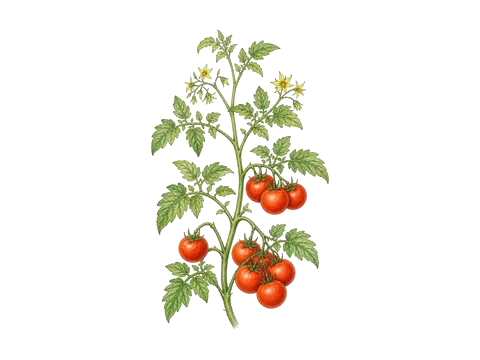
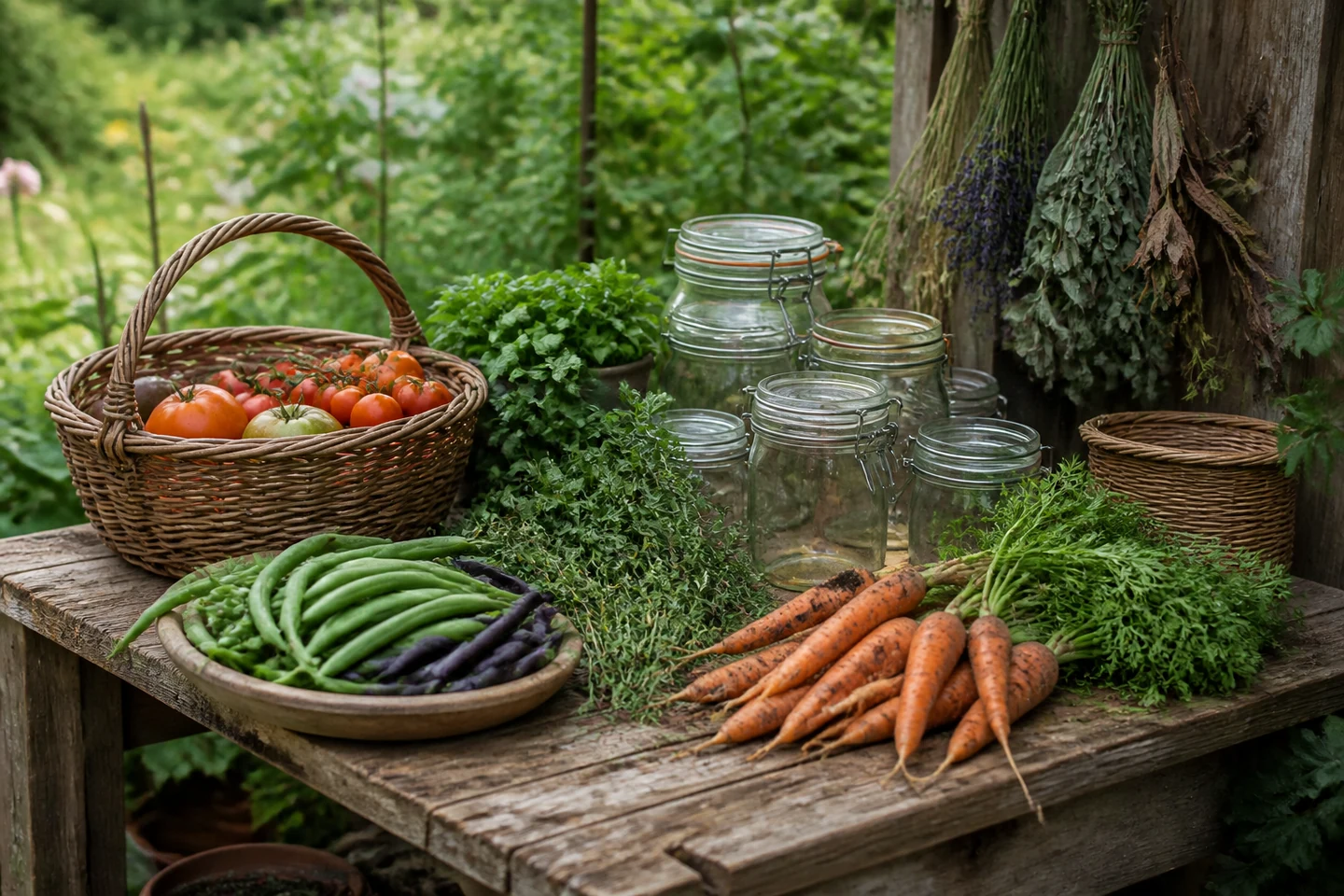
Each plant page gives a rough yield per plant and a harvest window. The planner multiplies by your quantities and lays the result across the calendar, so you can see that twelve tomato plants produce roughly 40–60 kg between July and October, mostly in August and September. The numbers are wide ranges; weather, cultivar and care move them a lot. They are for planning freezer space, not for promises.
Flattening the glut
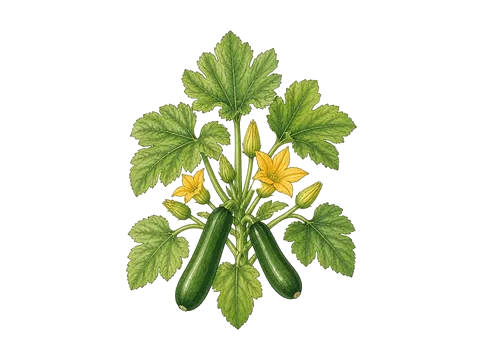
Succession sowing spreads beans, lettuce, radish and coriander. Choosing early, mid and late cultivars spreads tomatoes and potatoes. Two zucchini plants, not six.
Matching preservation to crop
| Crop | Best methods | Notes |
|---|---|---|
| Tomatoes | freeze whole, sauce, dry | freeze whole in bags, skins slip off when thawed |
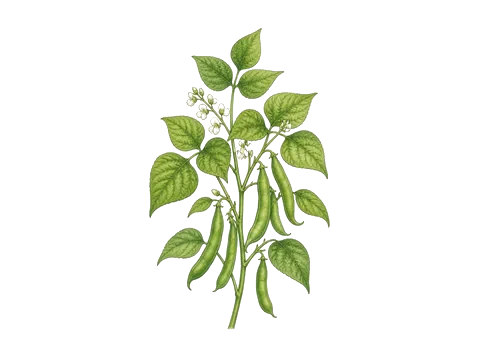
| Beans | blanch and freeze, ferment, dry (shelling types) | pick young |
| Zucchini | grate and freeze, pickle | watery when thawed; use in baking |
| Cucumbers | ferment, pickle | pickling cultivars hold better |
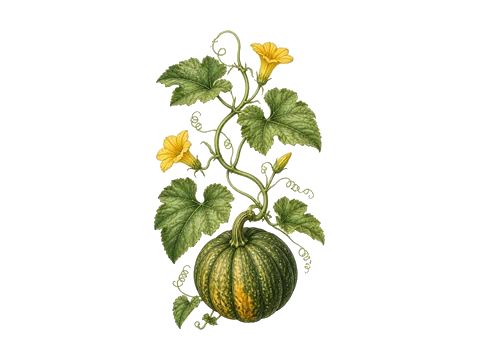
| Winter squash, pumpkin | cure and store 10–15 °C | 3–6 months |
| Garlic, onions | cure and store cool and dry | softneck garlic keeps longest |
| Potatoes | cure, store dark 4–8 °C | green tubers are toxic |
| Herbs | dry, freeze in oil | basil blackens when dried; freeze it |
| Berries | freeze on trays, jam | pick dry |
| Cabbage, kale | ferment (sauerkraut), blanch and freeze |
Storage crops
Winter squash, garlic, onions, potatoes, carrots and beets can feed you until spring if cured properly and stored at the right temperature and humidity. Curing means a week or two of warmth and airflow to harden skins and heal wounds.
In My Garden
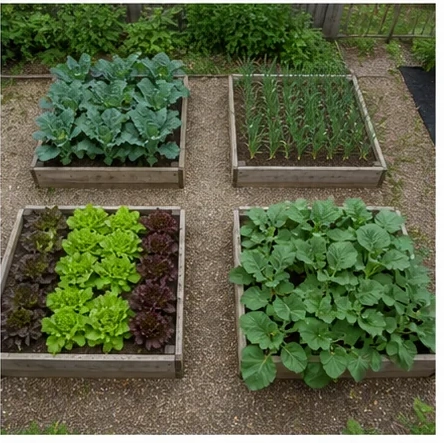
The harvest forecast on the dashboard uses your saved plan’s quantities and your frost dates. Log actual harvests and next year’s forecast can be compared with what you really got.
Sources
- Cornell University, Cornell Cooperative Extension (2024). Vegetable Growing Guides. Cornell University. Crop-by-crop guidance on sowing, transplanting, spacing, days to maturity, water and common problems used for catalog culture fields.
- Royal Horticultural Society (2025). Grow Your Own vegetables, herbs and fruit. Royal Horticultural Society. Cultivation guidance for cool-temperate maritime climates, including sowing months, spacing, support and container suitability.
Reviewer: Garden Planner editorial team (pending independent horticultural review). Last substantive review August 15, 2026. Request a correction · Methodology