Plan a Productive Raised Bed
7 min read · Reviewed August 15, 2026 · Garden Planner editorial team (pending independent horticultural review)
Dimensions
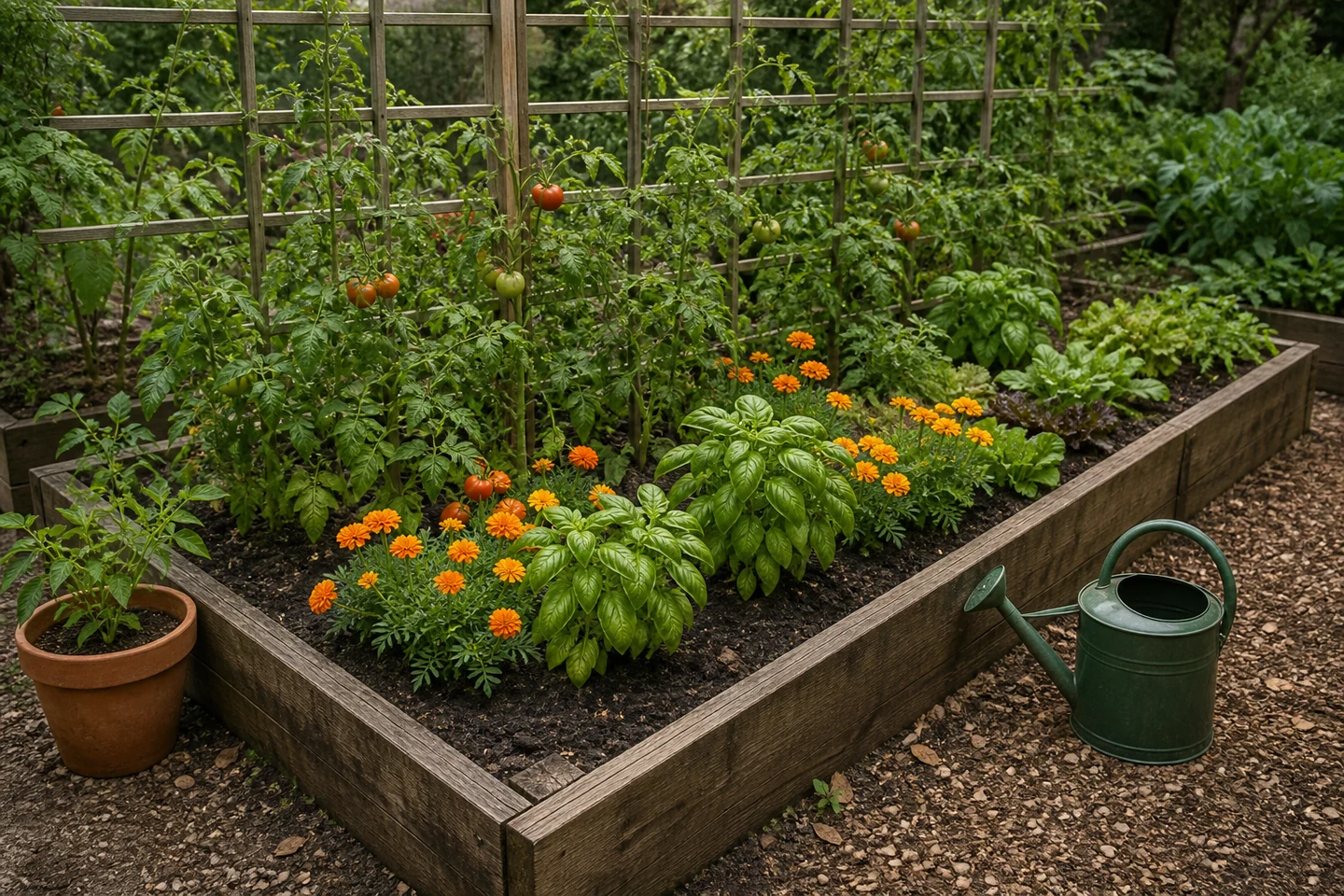
Width is decided by your reach: 1.2 m (4 ft) lets you work from both sides without stepping in; 60–90 cm if only one side is accessible. Length is up to you; 2.4–3.6 m is common. Depth of 25–30 cm suits most crops; carrots, parsnips and potatoes like 30 cm or more. Paths between beds need 45–60 cm, more for a wheelbarrow.
Orientation and light
Most vegetables want six to eight hours of direct sun. In the northern hemisphere, run long beds east–west and put tall crops and trellises on the north side so they do not shade the rest; reverse this south of the equator. The planner asks for north and the sun category and uses plant heights to check shading.
Soil mix
Roughly one-third compost, one-third topsoil, one-third coarse material (sand, fine bark) is a common recipe; pure compost is too rich and shrinks. Top up with compost every year.
Water
Raised beds drain and dry faster than ground beds. Drip line or a soaker hose under mulch is the easiest way to water evenly. Group thirsty crops together and the dry-soil herbs at one end.
What to grow first
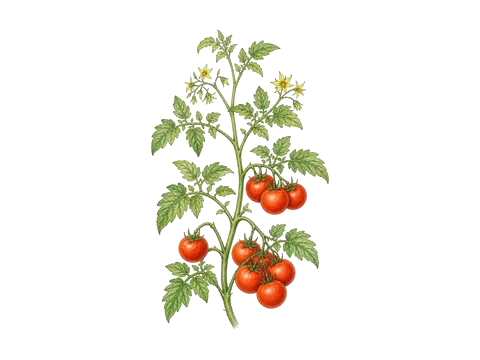
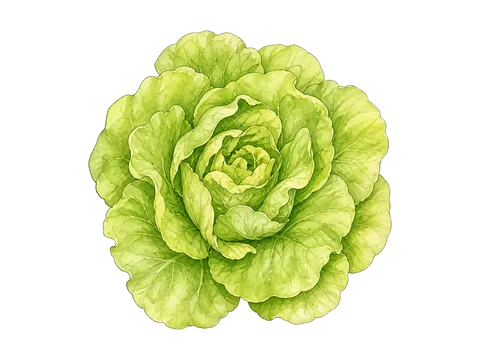
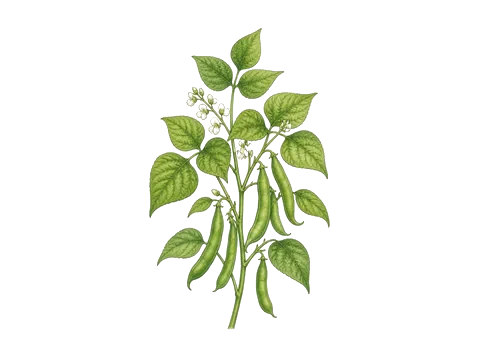
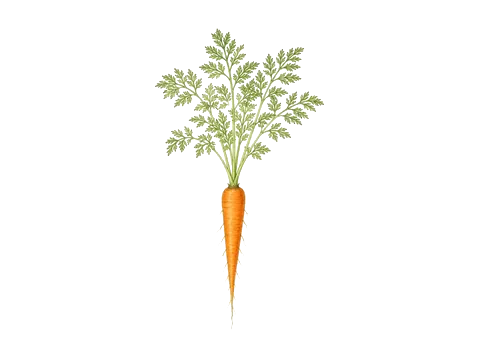
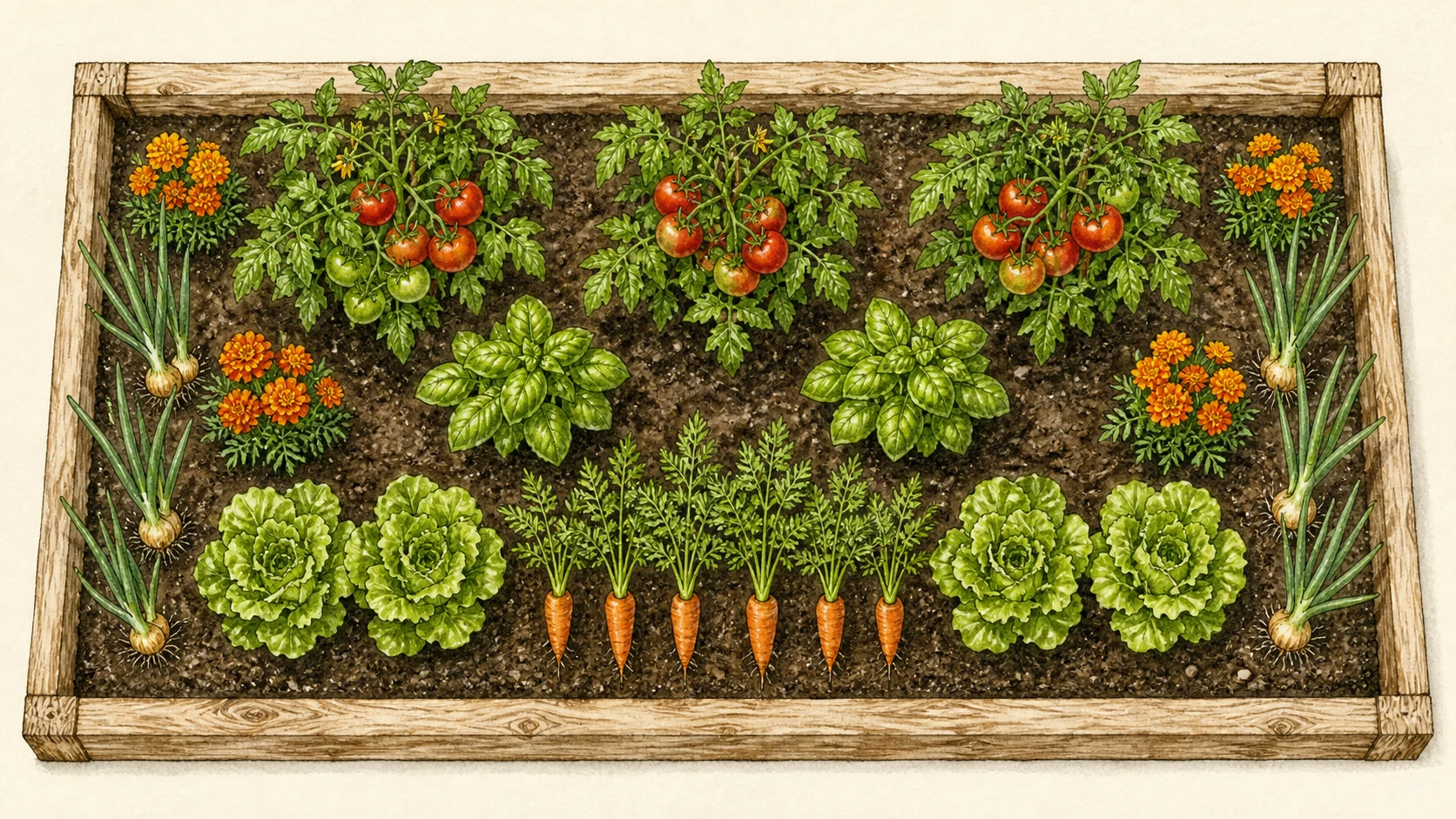
A first 1.2 × 2.4 m bed might hold: two tomatoes with basil on the south side of them, a row of bush beans, lettuce and radishes between, carrots along one edge, a marigold or two at the corners. That is the home-page example. The planner will reserve each plant’s footprint (tomato 4 cells, lettuce 1, carrots 16 per cell) and warn you if the tomatoes shade the beans.
Access and support
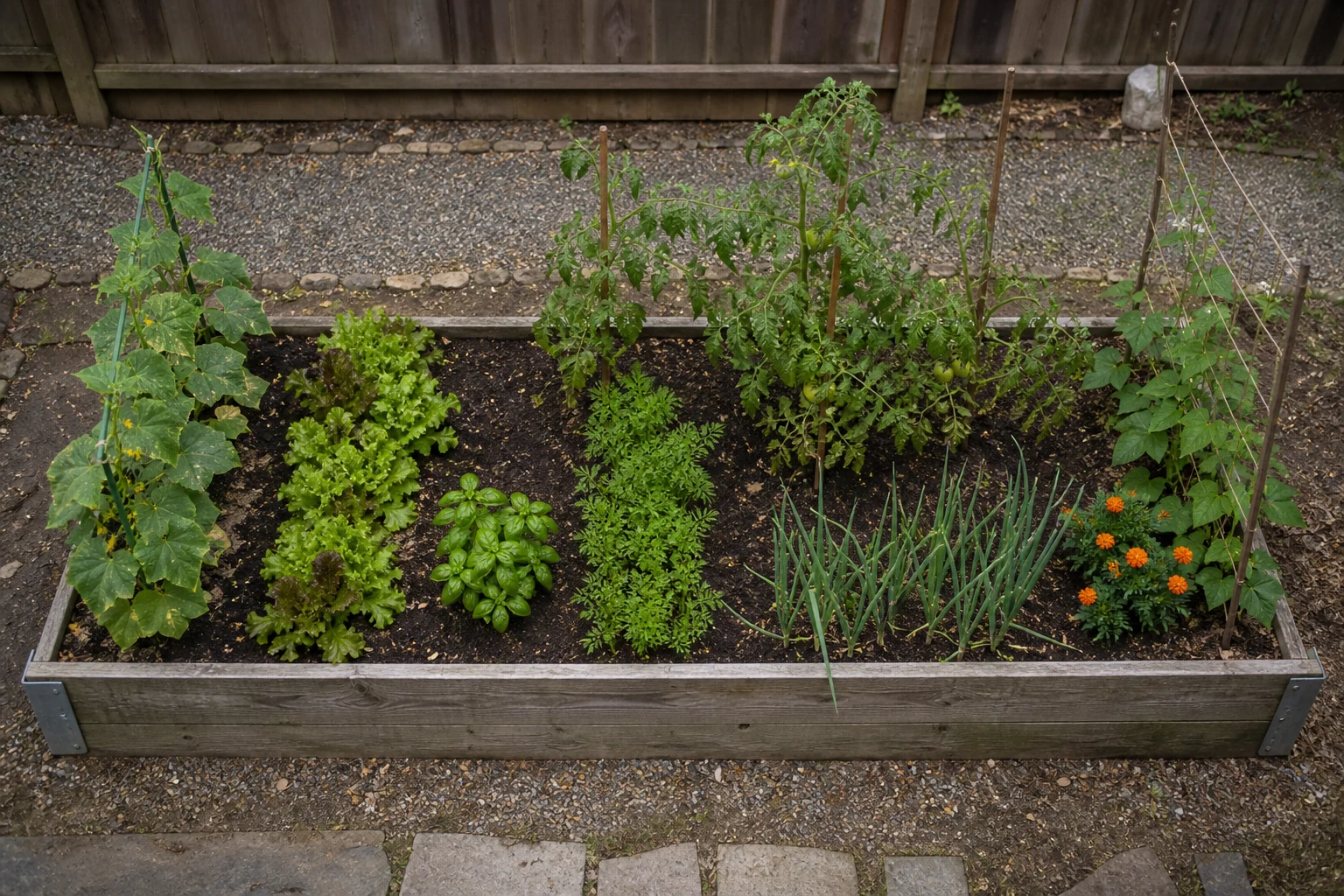
Leave a path; do not walk on the bed. Install cages, stakes or a trellis at planting, not later. Keep harvest access in mind: squash at the edge, tall things at the back.
Next
Describe your bed in the planner, or read about soil and seed starting.
Sources
- Cornell University, Cornell Cooperative Extension (2024). Vegetable Growing Guides. Cornell University. Crop-by-crop guidance on sowing, transplanting, spacing, days to maturity, water and common problems used for catalog culture fields.
- Royal Horticultural Society (2025). Grow Your Own vegetables, herbs and fruit. Royal Horticultural Society. Cultivation guidance for cool-temperate maritime climates, including sowing months, spacing, support and container suitability.
- Oregon State University Extension Service (2019). Growing Your Own. Oregon State University Extension. Region-specific planting dates, spacing and cultural requirements for common vegetables in western and eastern Oregon, used here for Pacific Northwest calendar assumptions.
Reviewer: Garden Planner editorial team (pending independent horticultural review). Last substantive review August 15, 2026. Request a correction · Methodology